aster.cloud aster.cloud
  • /
  • Platforms
    • Public Cloud
    • On-Premise
    • Hybrid Cloud
    • Data
  • Architecture
    • Design
    • Solutions
    • Enterprise
  • Engineering
    • Automation
    • Software Engineering
    • Project Management
    • DevOps
  • Programming
    • Learning
  • Tools
  • About
  • /
  • Platforms
    • Public Cloud
    • On-Premise
    • Hybrid Cloud
    • Data
  • Architecture
    • Design
    • Solutions
    • Enterprise
  • Engineering
    • Automation
    • Software Engineering
    • Project Management
    • DevOps
  • Programming
    • Learning
  • Tools
  • About
aster.cloud aster.cloud
  • /
  • Platforms
    • Public Cloud
    • On-Premise
    • Hybrid Cloud
    • Data
  • Architecture
    • Design
    • Solutions
    • Enterprise
  • Engineering
    • Automation
    • Software Engineering
    • Project Management
    • DevOps
  • Programming
    • Learning
  • Tools
  • About
  • Solutions
  • Technology

For Adaptation & Agriculture Day, Atlas AI Is Taking Action To Help Adapt Our Agricultural Systems To A Changing Climate

  • aster.cloud
  • December 15, 2022
  • 4 minute read

Editor’s note: At Google Cloud we’re working with global organizations to help them use technology to build a more sustainable future. During the 2022 United Nations Climate Change Conference, or COP27, representatives from countries and organizations around the world — including Google Cloud — gathered in Sharm El-Sheikh, Egypt from November 7 – 18, 2022 for the latest round of climate talks. Check here for perspectives from onsite, thoughts from Google experts and customers, curated content and announcements. Or catch the event for yourself on Youtube.


At COP27 over the weekend, the discussion turned to adaptation and agriculture — a fitting combination of topics as they are inextricably linked to one another. Weather-dependent systems such as food and agriculture are encountering more frequent and extreme threats, as a result of a changing climate around the world.


Partner with aster.cloud
for your next big idea.
Let us know here.


From our partners:

CITI.IO :: Business. Institutions. Society. Global Political Economy.
CYBERPOGO.COM :: For the Arts, Sciences, and Technology.
DADAHACKS.COM :: Parenting For The Rest Of Us.
ZEDISTA.COM :: Entertainment. Sports. Culture. Escape.
TAKUMAKU.COM :: For The Hearth And Home.
ASTER.CLOUD :: From The Cloud And Beyond.
LIWAIWAI.COM :: Intelligence, Inside and Outside.
GLOBALCLOUDPLATFORMS.COM :: For The World's Computing Needs.
FIREGULAMAN.COM :: For The Fire In The Belly Of The Coder.
ASTERCASTER.COM :: Supra Astra. Beyond The Stars.
BARTDAY.COM :: Prosperity For Everyone.

Climate-related disasters cost the global economy an estimated $520 billion USD each year, and push 26 million people — including many rural farmers — below the poverty line (UN, 2021). Meanwhile the vast majority of global climate investment is focused on mitigating future emissions — one estimate suggests that only 21% of climate financing currently goes towards adaptation initiatives. That balance must shift, as must the dialogue, in order to focus our limited current resources on increasing global resilience and well-being over the long term.
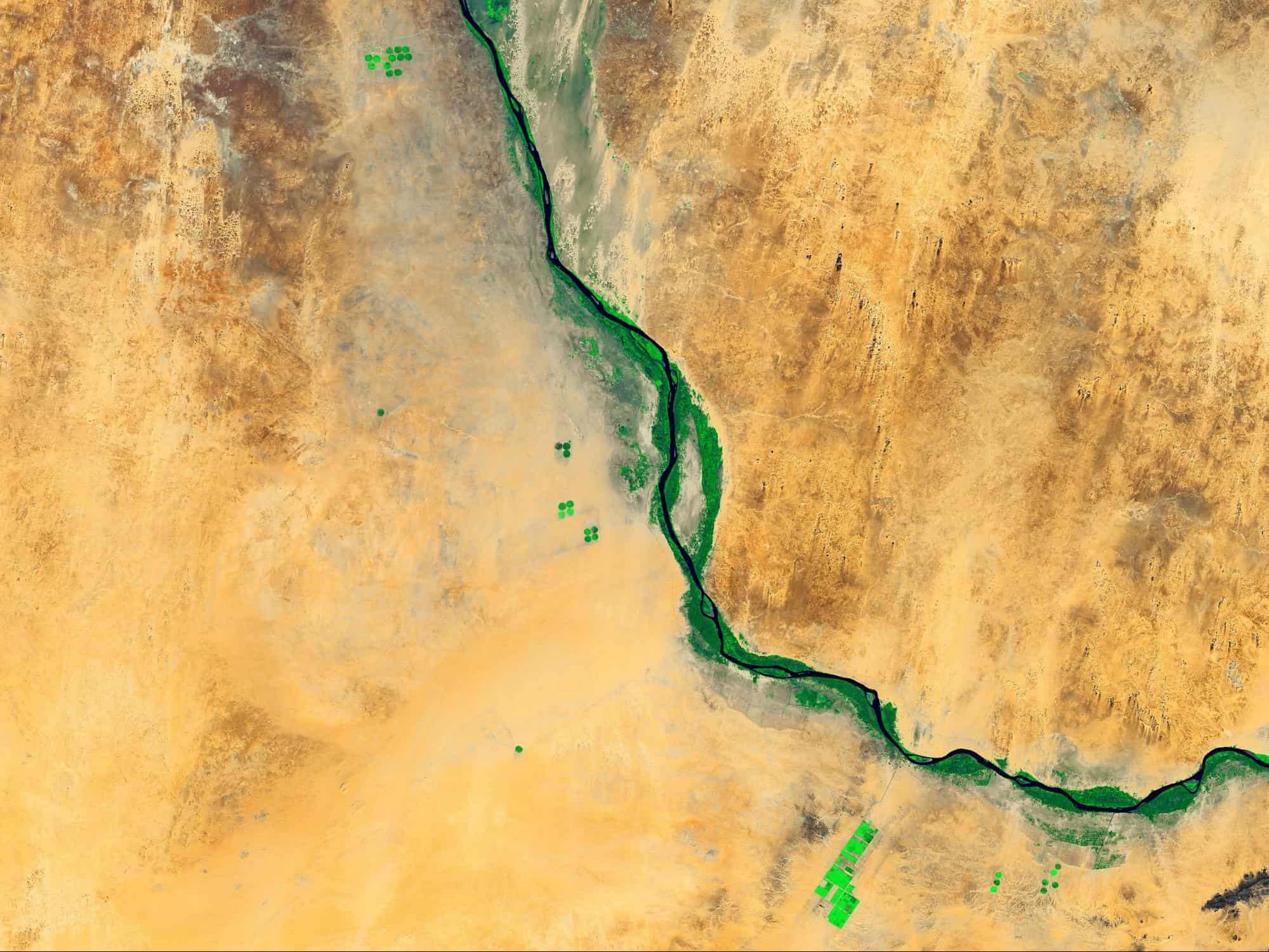
 

Satellite image of the Nile Valley in Sudan, Africa
Smallholder farmers are more vulnerable than most because of how tightly their activities and livelihoods are connected to weather patterns. Rural, agriculture-heavy regions will be particularly affected by drought, which is expected to displace 700 million people globally by 2030 (UN). When farmers displace to find suitable land, they often deforest new tracts, further exacerbating environmental changes. In addition to facing displacement, severe weather decreases farmers’ agriculture yields and threatens to push them deeper into poverty. In extreme cases, like the devastating recent floods in Pakistan, entire growing seasons have been eviscerated. Farmers may find traditional agricultural land no longer suitable for staple crops such as rice, maize and wheat — the crops that provide a significant portion of the world’s calories. And if they want to change or augment production, fertilizer or robust seed varietals are in scarce supply, making them inaccessible and/or unaffordable for smallholder communities. Needless to say, humanity faces a global challenge in adapting our agricultural systems to deal with a changing climate. 

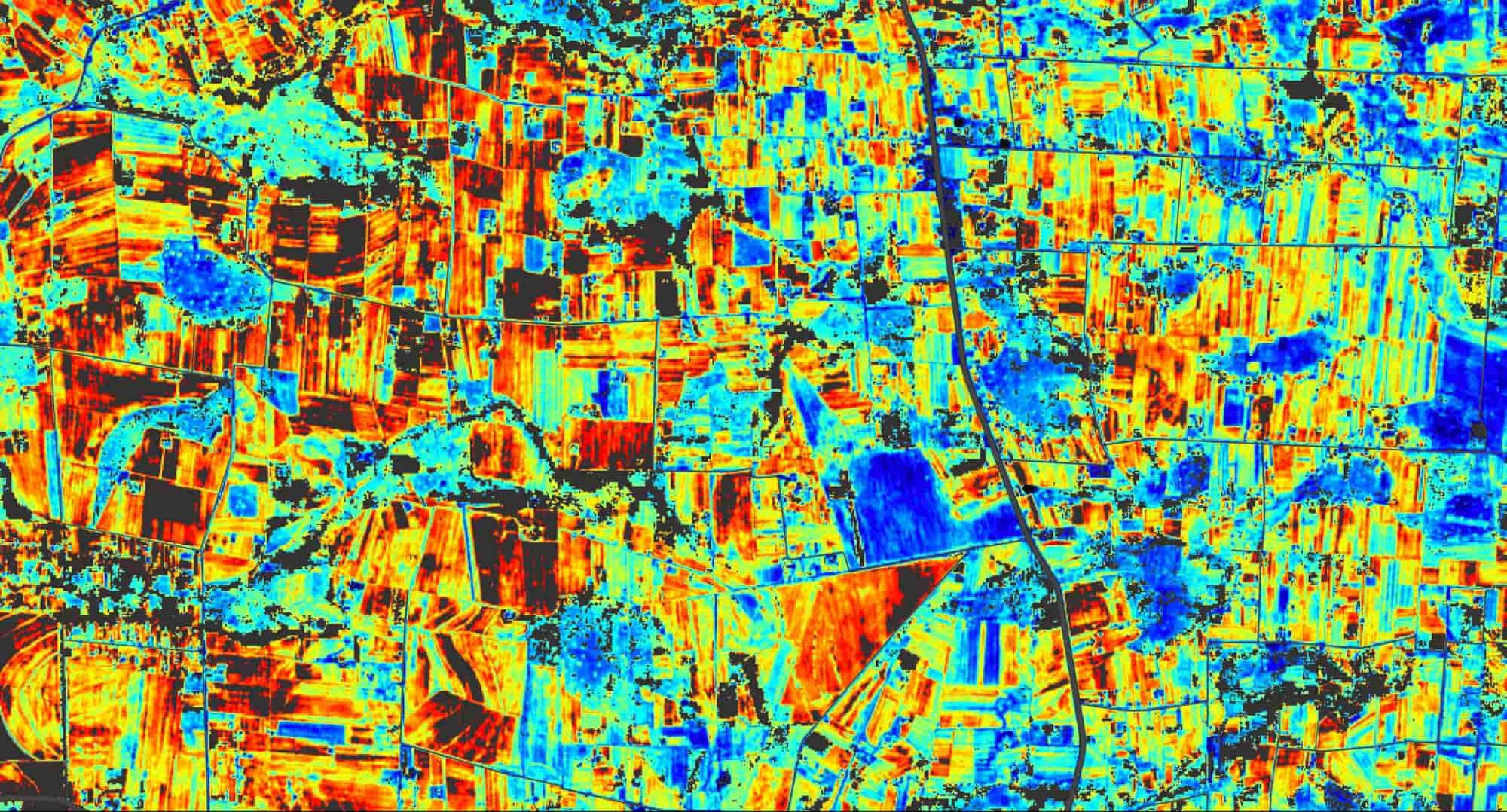
Spatial analysis of maize crop yields in Africa

Read More  Machine Learning Experiments In Gaming And Why It Matters
Despite the dire circumstances presented by the above statistics, this post is ultimately a hopeful one. Atlas AI is in the business of providing intelligence about the progress of development and well-being of local communities around the world. Our technology serves a range of organizations on the front lines of promoting the resilience and adaptation of farming communities to a changing climate. We offer three examples:

  • Finding leverage at the intersections of systems: In partnership with University of Massachusetts Amherst, Rochester Institute of Technology, Carnegie Mellon University, Columbia University and the Kigali Collaborate Research Center, and thanks to funding from The Rockefeller Foundation, we are advancing research to inform public policy and investment at the intersection of the agriculture, energy and transportation sectors in Africa. To cite one example of the potential benefits of this research, changing climate means less reliable rainy seasons. This can be countered in part by installing irrigation infrastructure, which in turn requires access to electricity. The platform developed through this research aims to identify where energy and irrigation investments might be better located, coordinated and sequenced, in order to promote local economic development.
  • Building better supply chains for agricultural inputs: MyAgro is a non-profit organization that promotes access to climate-resilient seeds and fertilizers as well as training to smallholder farmers, with a mission of moving farmers out of poverty in Africa. MyAgro is able to use Atlas AI’s platform to identify the rural farming communities best positioned to benefit from MyAgro’s programs and to track progress in delivering inputs to those communities over time. In this respect, technology can promote the scalability of climate resilience programs and ensure that limited resources are deployed to the greatest potential impact.
  • Improving monitoring of agricultural systems through remote sensing: The 50×2030 initiative aims to increase the capacity of 50 low and lower middle-income countries to produce, analyze, interpret, and apply data to decisions in the agricultural sector that support rural development and food security. In partnership with the Living Standards Measurement Survey (LSMS) team of the World Bank, Atlas AI is supporting the scientific research agenda of the initiative by evaluating best practices for the use of remote sensing (e.g., satellite imagery) analysis for monitoring crop productivity at a national scale. This work to understand the ongoing effects of climate on local agriculture systems will be essential to anticipate and adapt to the effects of climate on smallholder ecosystems.
Read More  ESWIN Computing launches the EBC77 Series Single Board Computer with Ubuntu

Adaptation needs in the developing world may reach as high as $340 billion a year by 2030 (UN, 2022). Atlas AI’s vision is to enable an ongoing and hyperlocal understanding of the development needs of every community on the planet so that this investment can be targeted and monitored in service of the greatest impact.


By: Abe Tarapani (CEO, Atlas AI)
Source: Google Cloud Blog


For enquiries, product placements, sponsorships, and collaborations, connect with us at [email protected]. We'd love to hear from you!

Our humans need coffee too! Your support is highly appreciated, thank you!

aster.cloud

Related Topics
  • Agriculture
  • Artificial Intelligence
  • Atlas AI
  • Climate Change
  • Google Cloud
  • Sustainability
You May Also Like
View Post
  • Gears
  • Technology

Apple unveils new iMac with M6, delivering a major boost in performance and AI capabilities

  • October 27, 2026
View Post
  • Technology

IBM and Siemens Collaborate on Research to Advance Nanostack Architecture

  • October 14, 2026
View Post
  • Technology

Accenture and Google Cloud Transform Software Development with Volvo Cars

  • September 22, 2026
View Post
  • Data
  • Technology

Synthetic data could ease people’s concerns about privacy breaches. But who gets to create it?

  • September 15, 2026
View Post
  • Computing
  • Multi-Cloud
  • Technology

Multi-cloud with AWS and Azure just got a whole lot easier thanks to a new interconnect service

  • September 2, 2026
View Post
  • Computing
  • Multi-Cloud
  • Technology

VMware targets ‘three core AI cost drivers’ with new Private AI Cloud service

  • September 2, 2026
View Post
  • Computing
  • Multi-Cloud
  • Technology

Agentic AI is spurring a ‘fundamental shift’ in cloud infrastructure consumption

  • August 17, 2026
View Post
  • Computing
  • Multi-Cloud
  • Technology

Why real SaaS resilience means breaking free of the hyperscaler

  • August 11, 2026

Stay Connected!
LATEST
  • 1
    Apple unveils groundbreaking MacBook Pro with PROLED XDR Display and Touch for the first time on Mac
    • October 28, 2026
  • 2
    Apple introduces the new 14‑inch MacBook Pro with M6
    • October 27, 2026
  • 3
    Apple unveils new iMac with M6, delivering a major boost in performance and AI capabilities
    • October 27, 2026
  • 4
    IBM and Siemens Collaborate on Research to Advance Nanostack Architecture
    • October 14, 2026
  • 5
    Chinese tech giant Huawei unveils Mate 90 series smartphones with flagship Tau chips adopting logic folding technology
    • October 2, 2026
  • 6
    IBM Acquires Logiq Consulting to Expand Secure Digital Transformation and Cybersecurity Capabilities in the UK
    • September 24, 2026
  • 7
    Accenture and Google Cloud Transform Software Development with Volvo Cars
    • September 22, 2026
  • 8
    Synthetic data could ease people’s concerns about privacy breaches. But who gets to create it?
    • September 15, 2026
  • 9
    Apple Flagship Hardware Launch for September 2026
    • September 10, 2026
  • 10
    Multi-cloud with AWS and Azure just got a whole lot easier thanks to a new interconnect service
    • September 2, 2026
about
Hello World!

We are aster.cloud. We’re created by programmers for programmers.

Our site aims to provide guides, programming tips, reviews, and interesting materials for tech people and those who want to learn in general.

We would like to hear from you.

If you have any feedback, enquiries, or sponsorship request, kindly reach out to us at:

[email protected]
Most Popular
  • 1
    Broadcom eyes security, performance boosts with vDefend and Avi Load Balancer updates
    • August 7, 2026
  • Why real SaaS resilience means breaking free of the hyperscaler
    • August 11, 2026
  • Agentic AI is spurring a ‘fundamental shift’ in cloud infrastructure consumption
    • August 17, 2026
  • 4
    VMware targets ‘three core AI cost drivers’ with new Private AI Cloud service
    • September 2, 2026
  • 5
    Digital sovereignty in the age of AI: You don’t have to choose between control and innovation
    • August 10, 2026
  • /
  • Technology
  • Tools
  • About
  • Contact Us

Input your search keywords and press Enter.