aster.cloud aster.cloud
  • /
  • Platforms
    • Public Cloud
    • On-Premise
    • Hybrid Cloud
    • Data
  • Architecture
    • Design
    • Solutions
    • Enterprise
  • Engineering
    • Automation
    • Software Engineering
    • Project Management
    • DevOps
  • Programming
    • Learning
  • Tools
  • About
  • /
  • Platforms
    • Public Cloud
    • On-Premise
    • Hybrid Cloud
    • Data
  • Architecture
    • Design
    • Solutions
    • Enterprise
  • Engineering
    • Automation
    • Software Engineering
    • Project Management
    • DevOps
  • Programming
    • Learning
  • Tools
  • About
aster.cloud aster.cloud
  • /
  • Platforms
    • Public Cloud
    • On-Premise
    • Hybrid Cloud
    • Data
  • Architecture
    • Design
    • Solutions
    • Enterprise
  • Engineering
    • Automation
    • Software Engineering
    • Project Management
    • DevOps
  • Programming
    • Learning
  • Tools
  • About
  • Data
  • Tech

Passwords Should Become A Thing Of The Past. Here’s Why

  • root
  • January 16, 2020
  • 3 minute read

When the man who invented passwords says it’s time to move on, it probably is. Four years ago, Fernando Corbato, who invented the first computer password in the 1960s, said that passwords had become “a nightmare”. Considering that his creation was not intended for the web, how data breaches have shaped the digital era, and the rise of privacy-awareness, it’s clear that things need to change.

Passwords were once one of our most trusted security measures, but over the past decade, the average person’s digital footprint has been exposed to increasing numbers of third parties. Now the average consumer manages over 191 pairs of usernames and passwords. It is almost guaranteed that people reuse the same passwords or tactics to authenticate across various services.


Partner with aster.cloud
for your next big idea.
Let us know here.


From our partners:

CITI.IO :: Business. Institutions. Society. Global Political Economy.
CYBERPOGO.COM :: For the Arts, Sciences, and Technology.
DADAHACKS.COM :: Parenting For The Rest Of Us.
ZEDISTA.COM :: Entertainment. Sports. Culture. Escape.
TAKUMAKU.COM :: For The Hearth And Home.
ASTER.CLOUD :: From The Cloud And Beyond.
LIWAIWAI.COM :: Intelligence, Inside and Outside.
GLOBALCLOUDPLATFORMS.COM :: For The World's Computing Needs.
FIREGULAMAN.COM :: For The Fire In The Belly Of The Coder.
ASTERCASTER.COM :: Supra Astra. Beyond The Stars.
BARTDAY.COM :: Prosperity For Everyone.

What’s wrong with passwords?

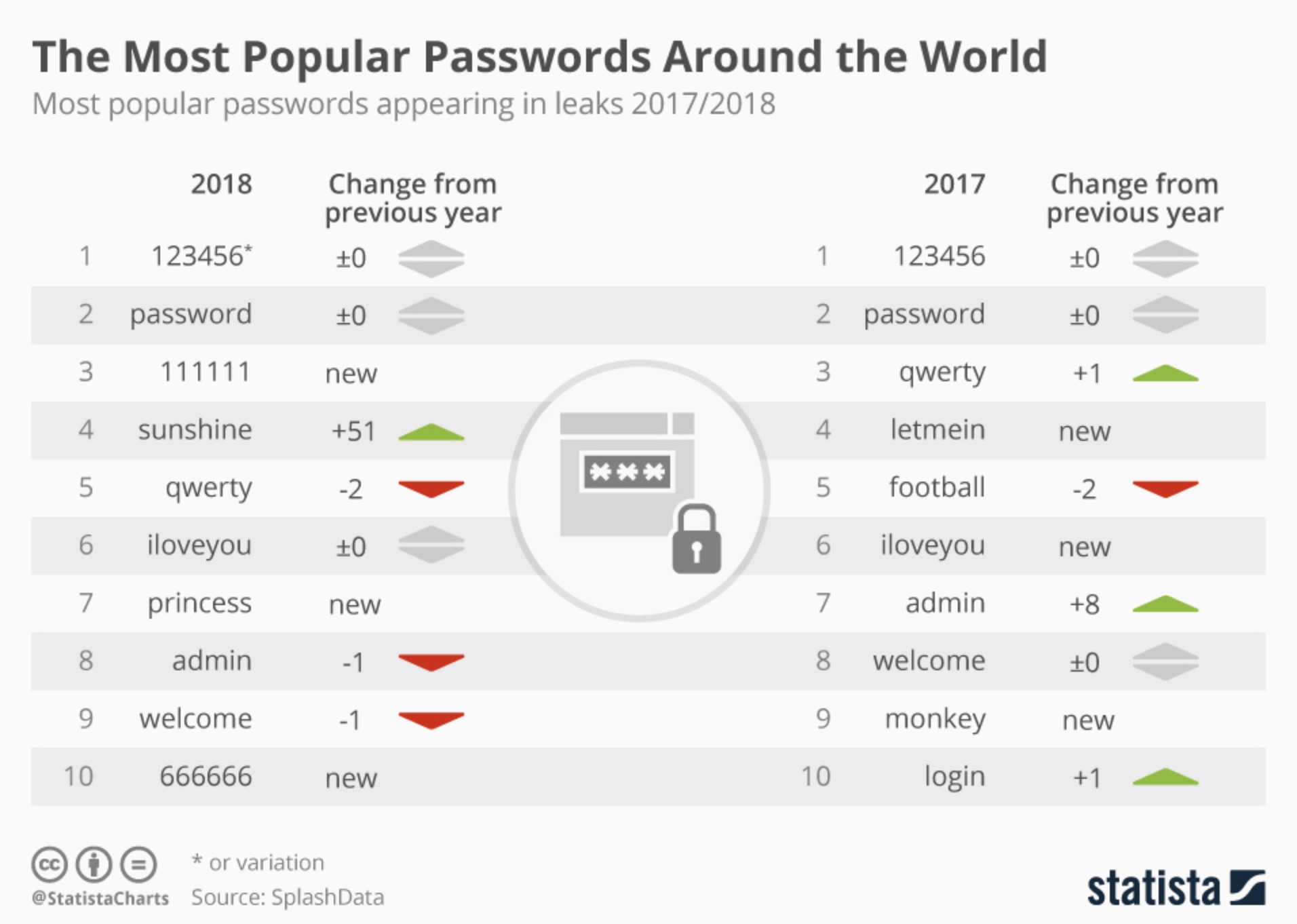
Most of the recent data breaches stem from stolen passwords. As digital platforms pile up gigabytes of data, including personal information and the credentials we use to get access to their digital services, the cost of attacks for hackers has decreased significantly. You can now buy login credentials to someone’s bank or Uber account on the dark web for as little as $7. Knowledge-based authentication, whether with PINs, passwords, passphrases, or whatever we need to remember, are not only a major headache for users – they cost a lot of money to maintain. Without even looking at the costs of a cyberattack, the mere costs of password management, of time lost by employees typing passwords and chasing the IT department when they fail, can climb up to $70 per incident. And with up to 50% of all help-desk calls being password resets, the costs can mount up quickly.
Read More  Cloud CISO Perspectives: January 2022
How to make life even easier for cybercriminals

Passwords aren’t just difficult to manage, they are inconvenient, insecure and expensive. Gartner predicts that by 2022, 60% of large businesses and all medium-sized companies will have cut their dependence on passwords by half. How?

Privacy-enhancing authentication technologies

Several trends have begun to enable the market to go passwordless and users to finally have control of their data. The first major government push has come with GDPR in Europe and the California Privacy Rights and Enforcement Act.

Consumers have become accustomed to having ‘free’ services, which are ultimately paid for from the sale of their data and without their explicit consent or knowledge – but users are starting to resist. Examples include the class action lawsuit filed against Facebook in Illinois and the Swedish data protection authority issuing its first fine under GDPR to a school for its improper use of facial recognition technology.

To meet the requirements established by these new laws, products and services must be designed with privacy at their core and provide complete transparency to their users. If services are built in this manner, we will be able to build biometrics in a trusted manner, which leaves only the question of whether companies can verify the information being submitted by their applicants. One way to solve this is with a scan of a person’s government-issued ID and a facial similarity check in combination with verified attributes.

A multistakeholder challenge that requires a multistakeholder approach

Both governments and private industry have a critical role to play in providing access to verified attributes. In 2018, the Better Identity Coalition released a report that calls for trusted government sources to open up access to the attributes they hold. Many governments have looked to help solve the problem of how to verify who someone says they are in a remote setting, with initiatives such as eIDAS in the EU, the Pan-Canadian Trust Framework, and Australia’s Trusted Digital Identity Framework.

Read More  Major IT outage brings businesses around the world to a standstill – expert explains what happened and why

For the world to become passwordless, we need to put users in control of their own data. This will allow the work of bodies such as the World Wide Web Consortium, which develops global standards for the web, and the Fido Alliance – an industry association dedicated to replacing passwords as our means of digital authentication – to rely on our devices and real-time attributes, so that users can verify themselves remotely and more securely.

The passwordless future is close. We will continue to see progress in 2020, but we need to act now to close the gap between trusting real-time verifications and ending our dependency on passwords. This can be done by providing a more trusted, secure, and convenient user experience, one which helps people protect how their data is being used while at the same time providing companies with access to a decentralized network to trust digital identities at scale. It will allow digital platforms to more easily onboard users between different digital services in real time, providing a trusted level of interoperability for an unparalleled user experience. Managing 191 digital accounts will become a breeze, and people will win back control of their identity.


Adrien Ogée, Project Lead, Cyber Resilience, World Economic Forum

Parker Crockford, Director of Policy & Strategic Accounts, Onfido

This article originally appeared in the World Economic Forum.


For enquiries, product placements, sponsorships, and collaborations, connect with us at [email protected]. We'd love to hear from you!

Our humans need coffee too! Your support is highly appreciated, thank you!

root

Related Topics
  • Authentication
  • Cybercrime
  • Cybersecurity
  • Digital Identity
  • Password
You May Also Like
Data center
View Post
  • Data
  • Public Cloud

Data Sovereignty in Spain. It’s Not Just About the Law, It’s About Efficiency

  • June 3, 2026
View Post
  • Data
  • Platforms
  • Technology

Scaling cloud and AI: Microsoft Azure’s commitment to Europe’s digital future

  • May 11, 2026
View Post
  • Data

Streamline read scalability with Cloud SQL autoscaling read pools

  • March 23, 2026
View Post
  • Data
  • Platforms
  • Public Cloud

PayPal’s historically large data migration is the foundation for its gen AI innovation

  • March 4, 2026
Smartphone hero image
View Post
  • Gears
  • Tech

Zed Approves | Smartphones for Every Budget Range

  • January 29, 2026
View Post
  • Data
  • Technology

3 obstacles to agentic AI adoption and how to overcome them

  • December 22, 2025
Early Black Friday Gears
View Post
  • Tech

Friday Deals – And It’s Not Even Black Friday Yet

  • November 13, 2025
Getting things done makes her feel amazing
View Post
  • Computing
  • Data
  • Featured
  • Learning
  • Tech
  • Technology

Nurturing Minds in the Digital Revolution

  • April 25, 2025

Stay Connected!
LATEST
  • digital-nomad-freelancer-worker-2151205464 1
    One paperwork problem – Get your Digital Nomad Visa employment documents fast from UK, EU or Singapore
    • June 16, 2026
  • 2
    Samsung Art Store Brings Art Basel to Homes Worldwide With New Curated Collection
    • June 15, 2026
  • 3
    You Do Not Need to Invest in the IPO of SpaceX, Anthropic, and OpenAI
    • June 10, 2026
  • 4
    The consequences of relying on AI for accurate news
    • June 10, 2026
  • 5
    Connecting AI agents with unstructured data using Google Cloud Storage MCP Servers
    • June 10, 2026
  • 6
    WWDC26: Apple unveils next generation of Apple Intelligence, Siri AI, powerful parental controls, and an expansive set of software improvements
    • June 8, 2026
  • 7
    IBM and Google Cloud Announce Strategic Partnership to Scale AI with Human Expertise and AI‑Powered Delivery
    • June 4, 2026
  • Data center 8
    Data Sovereignty in Spain. It’s Not Just About the Law, It’s About Efficiency
    • June 3, 2026
  • 9
    Ink vs Pixels. What you miss versus what you are actually missing.
    • June 1, 2026
  • 10
    Banks race to patch new cyber vulnerabilities, and other cybersecurity news
    • May 25, 2026
about
Hello World!

We are aster.cloud. We’re created by programmers for programmers.

Our site aims to provide guides, programming tips, reviews, and interesting materials for tech people and those who want to learn in general.

We would like to hear from you.

If you have any feedback, enquiries, or sponsorship request, kindly reach out to us at:

[email protected]
Most Popular
  • pope-leo-xiv-cq5dam-1500.844 1
    Pope Leo XIV to Publish First Encyclical on Artificial Intelligence and Human Dignity on 25 May
    • May 22, 2026
  • 2
    Portfolio to Clients, and is Strengthened by Ongoing Project Glasswing Work
    • May 20, 2026
  • reMarkable Paper Pure 3
    Everything The reMarkable Paper Pure Actually Does
    • May 14, 2026
  • 4
    Scaling cloud and AI: Microsoft Azure’s commitment to Europe’s digital future
    • May 11, 2026
  • Anthropic Institute 5
    Introducing The Anthropic Institute
    • March 11, 2026
  • /
  • Technology
  • Tools
  • About
  • Contact Us

Input your search keywords and press Enter.