aster.cloud aster.cloud
  • /
  • Platforms
    • Public Cloud
    • On-Premise
    • Hybrid Cloud
    • Data
  • Architecture
    • Design
    • Solutions
    • Enterprise
  • Engineering
    • Automation
    • Software Engineering
    • Project Management
    • DevOps
  • Programming
    • Learning
  • Tools
  • About
  • /
  • Platforms
    • Public Cloud
    • On-Premise
    • Hybrid Cloud
    • Data
  • Architecture
    • Design
    • Solutions
    • Enterprise
  • Engineering
    • Automation
    • Software Engineering
    • Project Management
    • DevOps
  • Programming
    • Learning
  • Tools
  • About
aster.cloud aster.cloud
  • /
  • Platforms
    • Public Cloud
    • On-Premise
    • Hybrid Cloud
    • Data
  • Architecture
    • Design
    • Solutions
    • Enterprise
  • Engineering
    • Automation
    • Software Engineering
    • Project Management
    • DevOps
  • Programming
    • Learning
  • Tools
  • About
  • Platforms

How To Create A Spanner Instance In GCP

  • root
  • November 15, 2020
  • 2 minute read

In this guide you will be able to provision a Spanner instance. 

1. Login in to the Google Cloud Platform console. If you don’t have any account yet, follow the steps here on how to create a Google Cloud Platform account.


Partner with aster.cloud
for your next big idea.
Let us know here.


From our partners:

CITI.IO :: Business. Institutions. Society. Global Political Economy.
CYBERPOGO.COM :: For the Arts, Sciences, and Technology.
DADAHACKS.COM :: Parenting For The Rest Of Us.
ZEDISTA.COM :: Entertainment. Sports. Culture. Escape.
TAKUMAKU.COM :: For The Hearth And Home.
ASTER.CLOUD :: From The Cloud And Beyond.
LIWAIWAI.COM :: Intelligence, Inside and Outside.
GLOBALCLOUDPLATFORMS.COM :: For The World's Computing Needs.
FIREGULAMAN.COM :: For The Fire In The Belly Of The Coder.
ASTERCASTER.COM :: Supra Astra. Beyond The Stars.
BARTDAY.COM :: Prosperity For Everyone.


Create the Spanner Instance

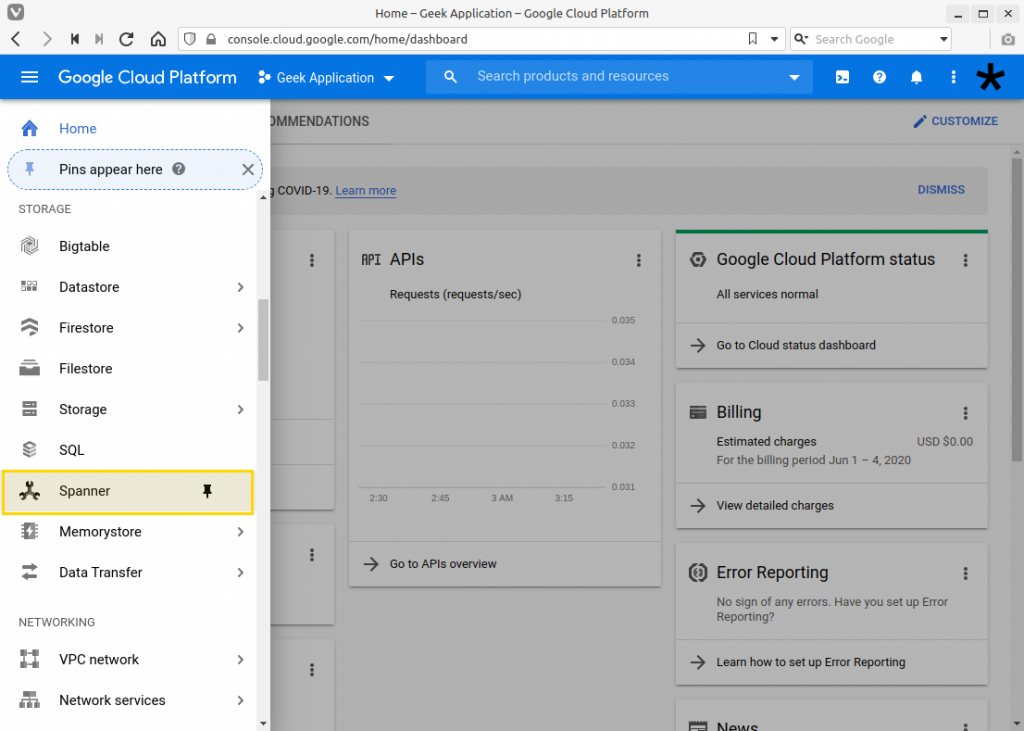
2. Once authenticated, you will be shown the Dashboard. Click on the hamburger icon on the top-left to open the navigation menu. Select Spanner under the Storage section. 
 

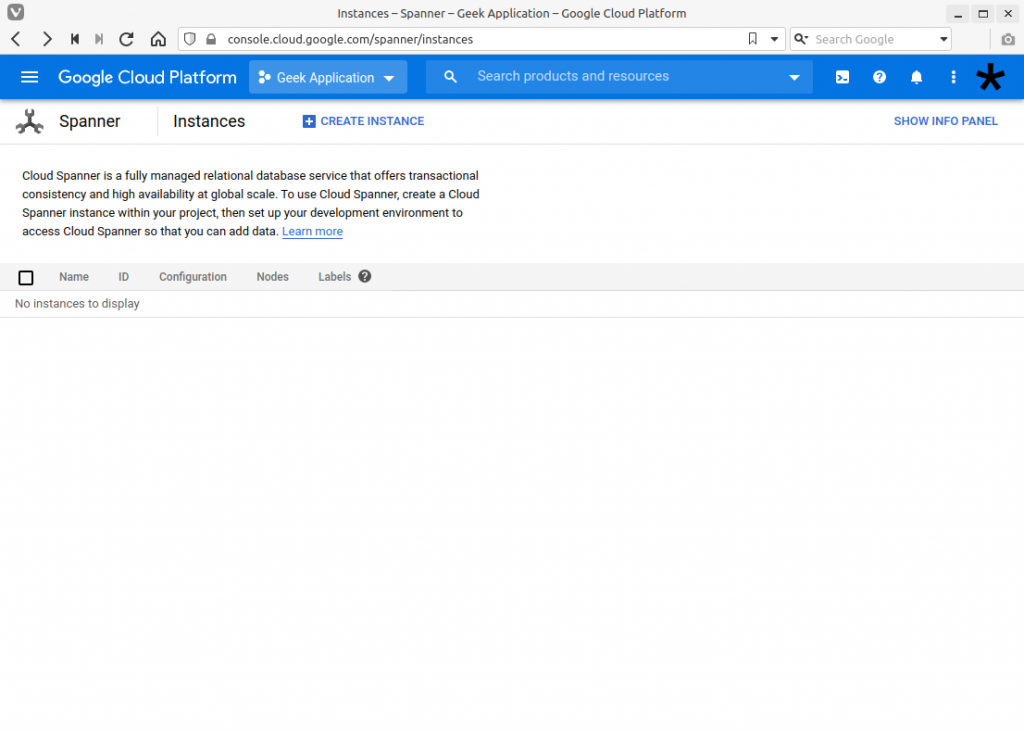
3. You will be taken to the Spanner instances page. In the following image there are no instances created yet.
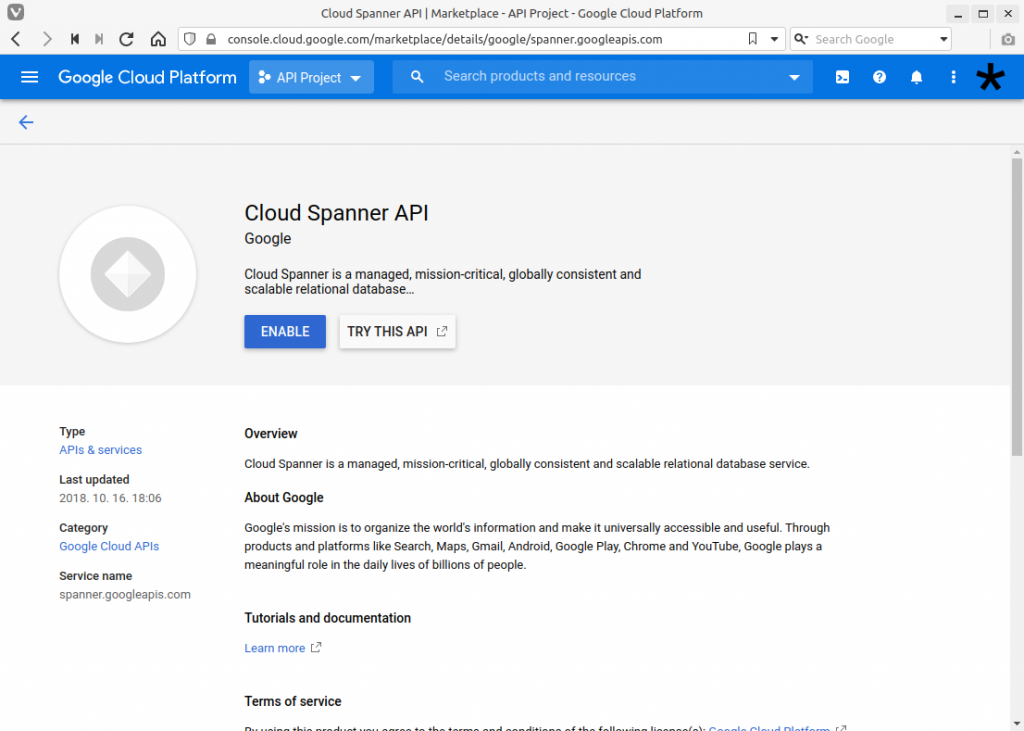
If this is your first time accessing Spanner, you will need to enable the API and the following will be shown. Click on the “Enable” button to enable it and be able to manage Spanner instances.
 

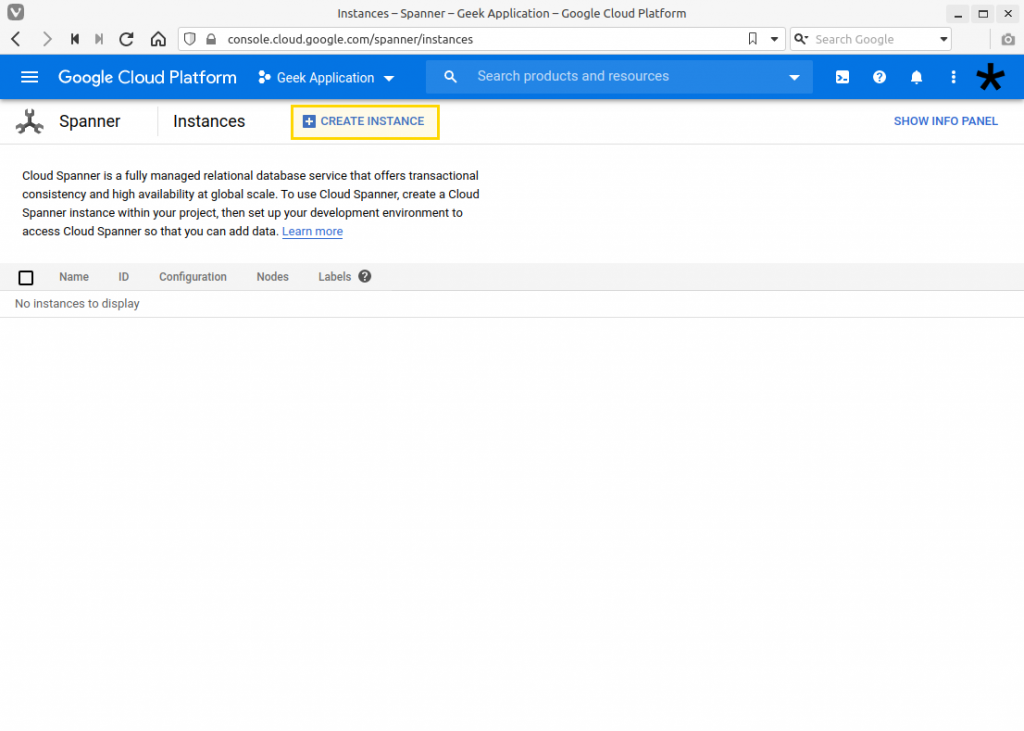
4. Select on the “Create Instance” 
 

5. A form where you enter the details of the instance will be shown. 
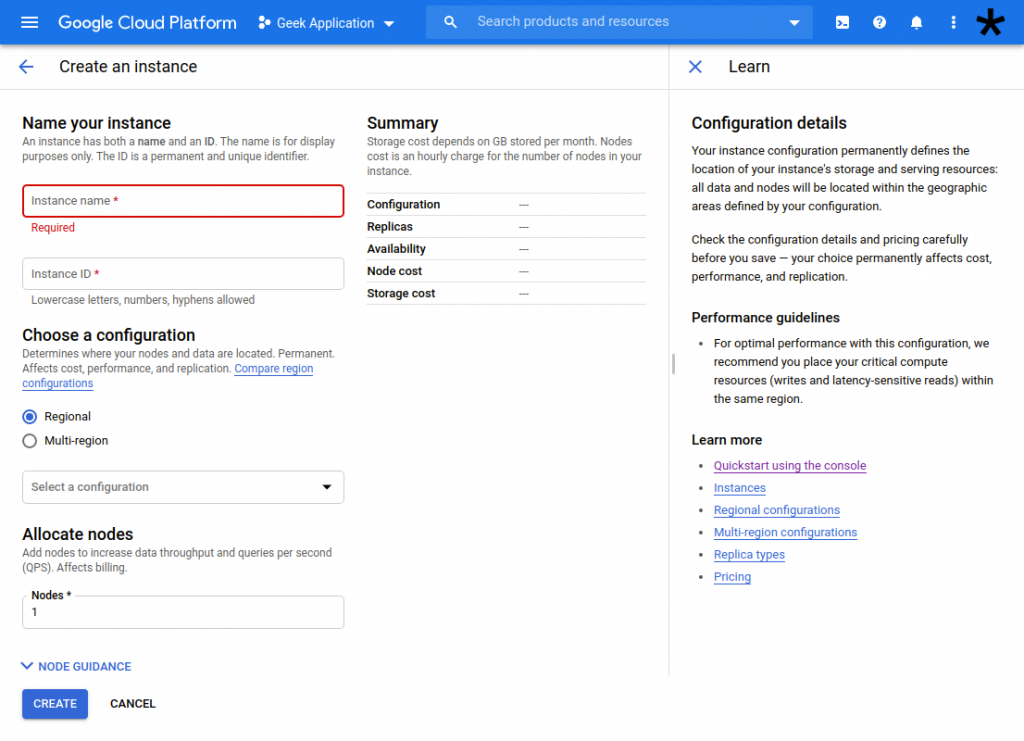
 

Name your instance
Instance name The name of your spanner instance. This is for display purpose and can still be updated later.
Instance ID By default, after selecting an instance name, the Instance ID will be created based on the name. But can still be changed. This must be unique across the project.

Cannot be changed after creation.

Choose a configuration
Configuration type
  • Regional
  • Multi-regional

Cannot be changed after creation.

Location Depending on the type, the values will change. Multi-regional has 2 or more locations.
Allocate node
Nodes The number of nodes to assign to this instance. Note that this can still be updated later.


A summary will also be shown on the right side. This contains Replicas that will be created automatically by GCP, percent of availability or SLA, node cost and storage cost.


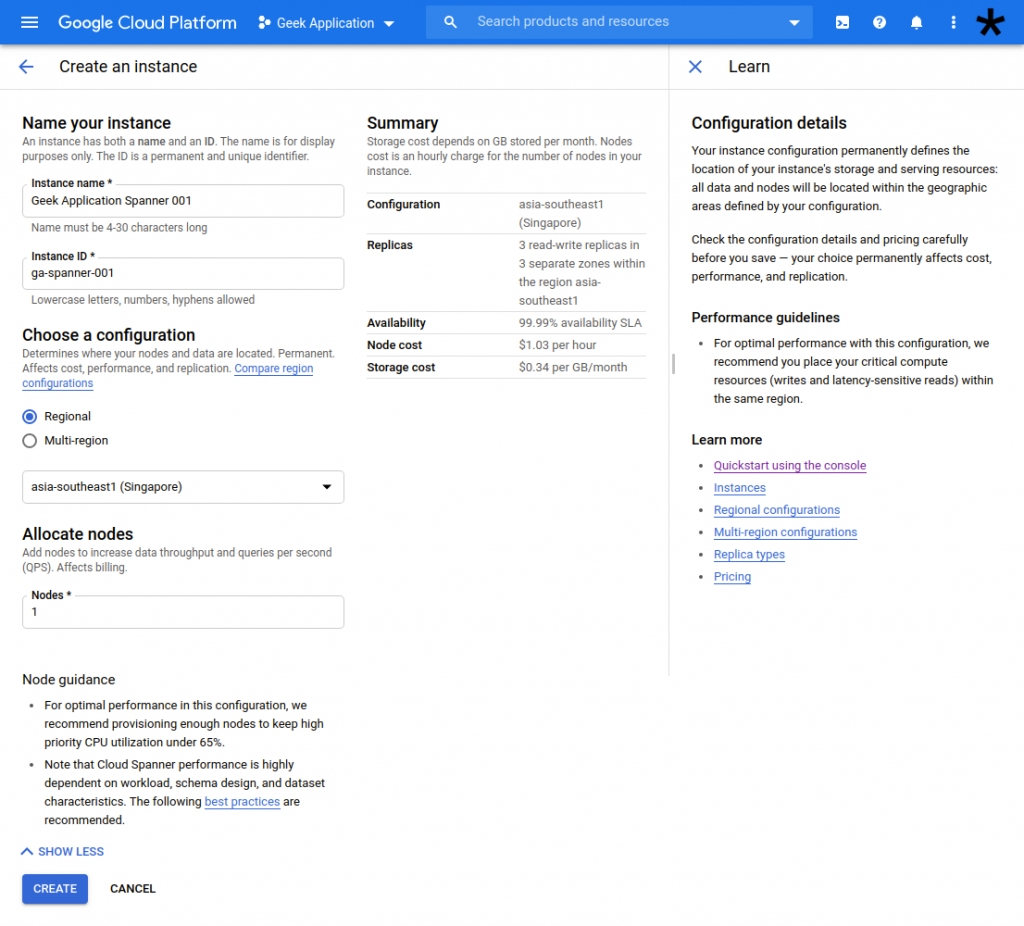
6. Select the “Create” button once you have reviewed the setting. The following image shows the setting we are using in this guide.
 

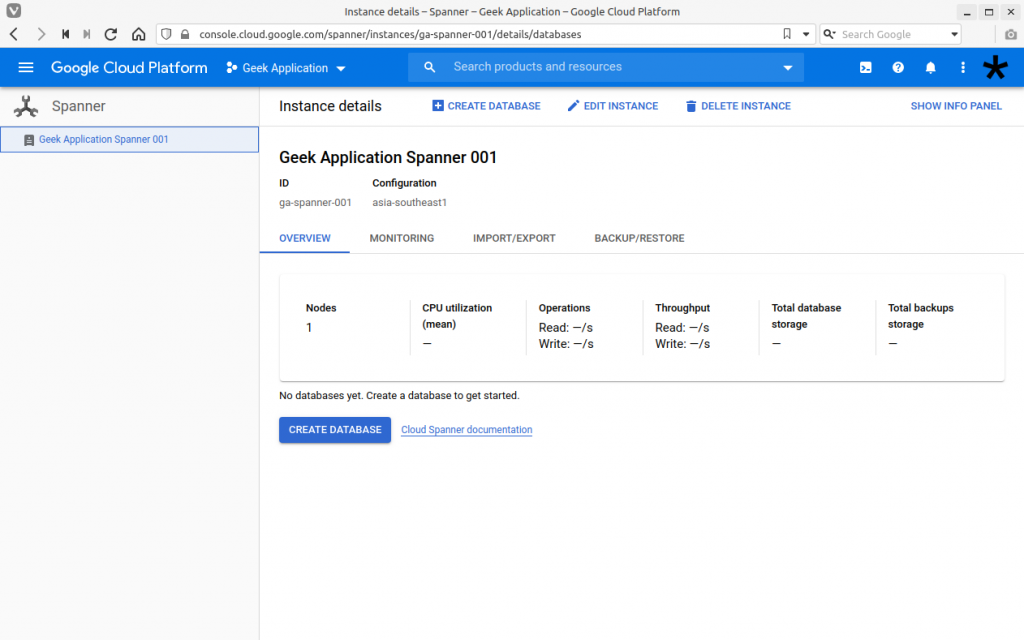
7. Instance creation is fast and the details will be shown. 
 

Create a Database

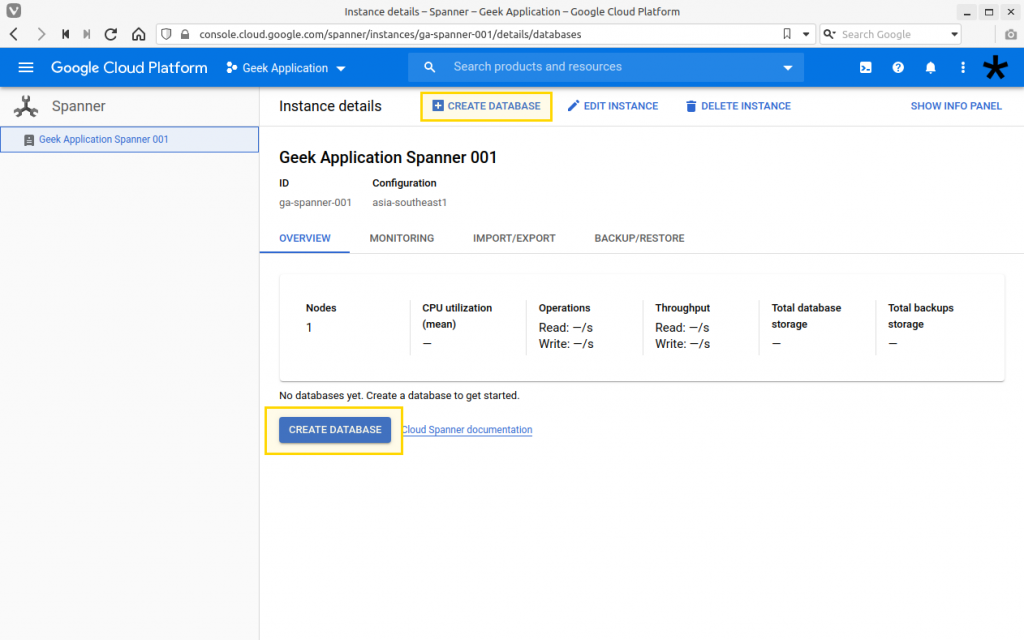
8. Next, we create the database. Click on the “Create Database” on the top section or on the bottom.
 

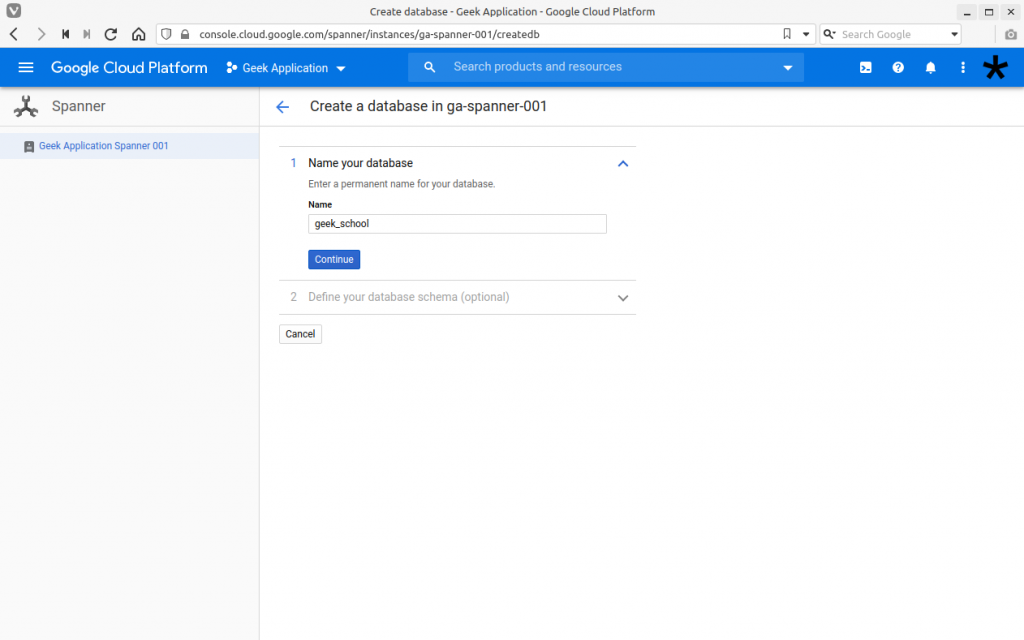
9. We will be creating a school-themed database. Starting with the school name as the database. Naming the database and school as “geek_school”. Then select the “Continue” button.

Allowed characters for the database name are

  • Only lower case letters
  • Numbers
  • Hyphens
  • Underscores


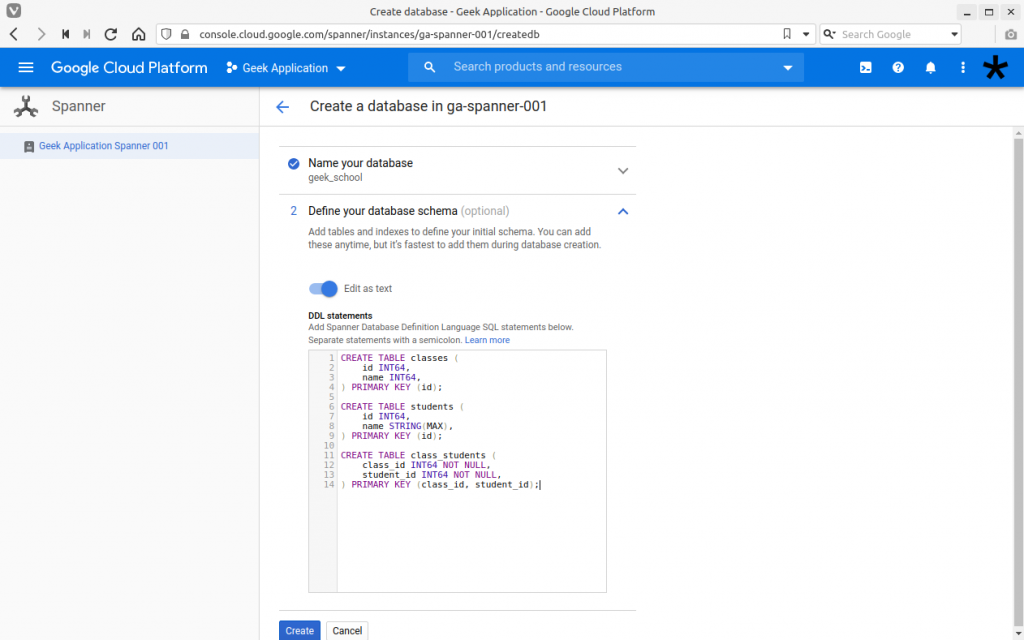
10. There are 2 options for creating the database tables. Using DDL (SQL Script) or by disabling the “Edit as text” radio button. Select the “Edit as text” and enter the following script.

CREATE TABLE classes (

id INT64,

name INT64,

) PRIMARY KEY (id);

CREATE TABLE students (

id INT64,

name STRING(MAX),

) PRIMARY KEY (id);

CREATE TABLE class_students (

class_id INT64 NOT NULL,

student_id INT64 NOT NULL,

) PRIMARY KEY (class_id, student_id);


11. Review the DDL or Data Definition Language which describes the structure of the database and its tables. Then select the “Create” button.


12. The Spanner instance now has a database and tables created. 
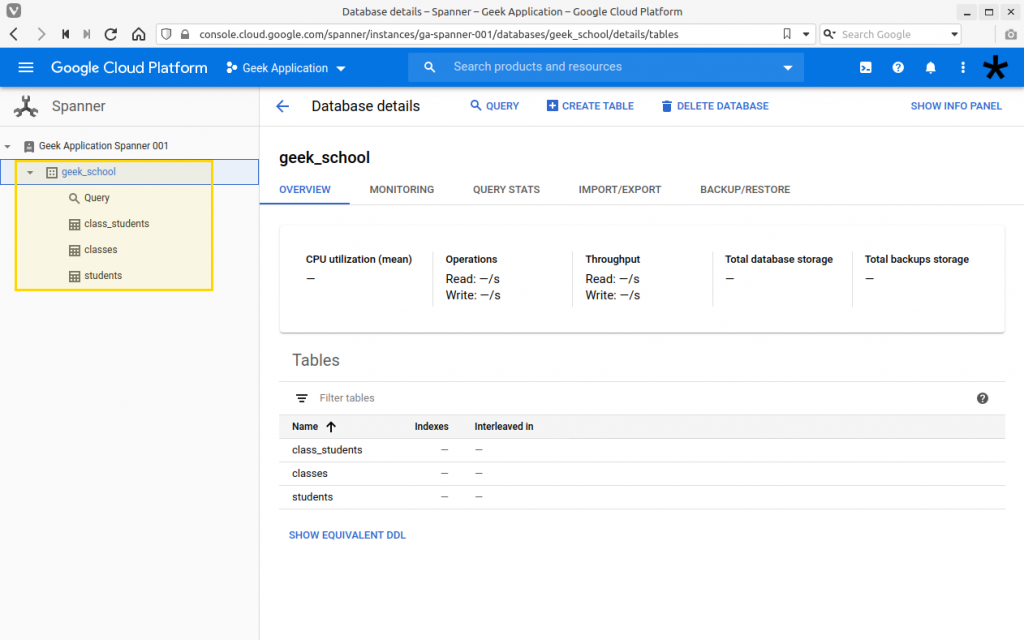
 

13. You have now created the following resources

  • Spanner instance
  • Database
  • Table


To view the details of a spanner instance go to Cloud Storages – GCP – Spanner – Read/View and Query next.

Read More  Google Cloud Next 2019 | Machine Learning Framework for Liquidity Risk Management

For enquiries, product placements, sponsorships, and collaborations, connect with us at [email protected]. We'd love to hear from you!

Our humans need coffee too! Your support is highly appreciated, thank you!

root

Related Topics
  • Cloud Spanner API
  • GCP
  • google
  • Google Cloud Platform
  • Spanner Instance
You May Also Like
View Post
  • Data
  • Platforms
  • Technology

Scaling cloud and AI: Microsoft Azure’s commitment to Europe’s digital future

  • May 11, 2026
View Post
  • Data
  • Platforms
  • Public Cloud

PayPal’s historically large data migration is the foundation for its gen AI innovation

  • March 4, 2026
View Post
  • Platforms
  • Technology

Microsoft Sovereign Cloud adds governance, productivity and support for large AI models securely running even when completely disconnected 

  • March 3, 2026
Google Cloud and Smart Communications
View Post
  • Platforms
  • Technology

Smart Communications, Inc. Dials into Google Cloud AI to Help Personalize Digital Services for Filipinos

  • October 25, 2024
View Post
  • Platforms
  • Public Cloud

Empowering builders with the new AWS Asia Pacific (Malaysia) Region

  • August 30, 2024
Red Hat and Globe Telecoms
View Post
  • Platforms
  • Technology

Globe Collaborates with Red Hat Open Innovation Labs to Modernize IT Infrastructure for Greater Agility and Scalability

  • August 19, 2024
Huawei Cloud Cairo Region Goes Live
View Post
  • Cloud-Native
  • Computing
  • Platforms

Huawei Cloud Goes Live in Egypt

  • May 24, 2024
Asteroid
View Post
  • Computing
  • Platforms
  • Technology

Asteroid Institute And Google Cloud Identify 27,500 New Asteroids, Revolutionizing Minor Planet Discovery With Cloud Technology

  • April 30, 2024

Stay Connected!
LATEST
  • digital-nomad-freelancer-worker-2151205464 1
    One paperwork problem – Get your Digital Nomad Visa employment documents fast from UK, EU or Singapore
    • June 16, 2026
  • 2
    Samsung Art Store Brings Art Basel to Homes Worldwide With New Curated Collection
    • June 15, 2026
  • 3
    You Do Not Need to Invest in the IPO of SpaceX, Anthropic, and OpenAI
    • June 10, 2026
  • 4
    The consequences of relying on AI for accurate news
    • June 10, 2026
  • 5
    Connecting AI agents with unstructured data using Google Cloud Storage MCP Servers
    • June 10, 2026
  • 6
    WWDC26: Apple unveils next generation of Apple Intelligence, Siri AI, powerful parental controls, and an expansive set of software improvements
    • June 8, 2026
  • 7
    IBM and Google Cloud Announce Strategic Partnership to Scale AI with Human Expertise and AI‑Powered Delivery
    • June 4, 2026
  • Data center 8
    Data Sovereignty in Spain. It’s Not Just About the Law, It’s About Efficiency
    • June 3, 2026
  • 9
    Ink vs Pixels. What you miss versus what you are actually missing.
    • June 1, 2026
  • 10
    Banks race to patch new cyber vulnerabilities, and other cybersecurity news
    • May 25, 2026
about
Hello World!

We are aster.cloud. We’re created by programmers for programmers.

Our site aims to provide guides, programming tips, reviews, and interesting materials for tech people and those who want to learn in general.

We would like to hear from you.

If you have any feedback, enquiries, or sponsorship request, kindly reach out to us at:

[email protected]
Most Popular
  • pope-leo-xiv-cq5dam-1500.844 1
    Pope Leo XIV to Publish First Encyclical on Artificial Intelligence and Human Dignity on 25 May
    • May 22, 2026
  • 2
    Portfolio to Clients, and is Strengthened by Ongoing Project Glasswing Work
    • May 20, 2026
  • reMarkable Paper Pure 3
    Everything The reMarkable Paper Pure Actually Does
    • May 14, 2026
  • 4
    Scaling cloud and AI: Microsoft Azure’s commitment to Europe’s digital future
    • May 11, 2026
  • Anthropic Institute 5
    Introducing The Anthropic Institute
    • March 11, 2026
  • /
  • Technology
  • Tools
  • About
  • Contact Us

Input your search keywords and press Enter.