aster.cloud aster.cloud
  • /
  • Platforms
    • Public Cloud
    • On-Premise
    • Hybrid Cloud
    • Data
  • Architecture
    • Design
    • Solutions
    • Enterprise
  • Engineering
    • Automation
    • Software Engineering
    • Project Management
    • DevOps
  • Programming
    • Learning
  • Tools
  • About
  • /
  • Platforms
    • Public Cloud
    • On-Premise
    • Hybrid Cloud
    • Data
  • Architecture
    • Design
    • Solutions
    • Enterprise
  • Engineering
    • Automation
    • Software Engineering
    • Project Management
    • DevOps
  • Programming
    • Learning
  • Tools
  • About
aster.cloud aster.cloud
  • /
  • Platforms
    • Public Cloud
    • On-Premise
    • Hybrid Cloud
    • Data
  • Architecture
    • Design
    • Solutions
    • Enterprise
  • Engineering
    • Automation
    • Software Engineering
    • Project Management
    • DevOps
  • Programming
    • Learning
  • Tools
  • About
  • Public Cloud
  • Tech

Google Cloud Fuels New Discoveries In Astronomy

  • aster.cloud
  • December 9, 2020
  • 3 minute read

From understanding our origins to predicting future events, some of the greatest breakthroughs we’ve made on Earth have come from studying the universe. High-performance computing and machine learning (ML) are accelerating this kind of research at an unprecedented pace. At Google Cloud, we’re proud to play even a small role in advancing the science of astronomy—and that’s why we’re excited today to highlight new work with the Vera C. Rubin Observatory in Chile and researchers at the California Institute of Technology.


Partner with aster.cloud
for your next big idea.
Let us know here.


From our partners:

CITI.IO :: Business. Institutions. Society. Global Political Economy.
CYBERPOGO.COM :: For the Arts, Sciences, and Technology.
DADAHACKS.COM :: Parenting For The Rest Of Us.
ZEDISTA.COM :: Entertainment. Sports. Culture. Escape.
TAKUMAKU.COM :: For The Hearth And Home.
ASTER.CLOUD :: From The Cloud And Beyond.
LIWAIWAI.COM :: Intelligence, Inside and Outside.
GLOBALCLOUDPLATFORMS.COM :: For The World's Computing Needs.
FIREGULAMAN.COM :: For The Fire In The Belly Of The Coder.
ASTERCASTER.COM :: Supra Astra. Beyond The Stars.
BARTDAY.COM :: Prosperity For Everyone.

The cloud foundation for 20TB of nightly sky observations

In a pioneering collaboration, the Rubin Observatory has finalized a three-year agreement to host its Interim Data Facility (IDF) on Google Cloud. Through this collaboration, Rubin will process astronomical data collected by the observatory and make the data available to hundreds of users in the scientific community in advance of its 10-year Legacy Survey of Space and Time (LSST) project.

The LSST aims to conduct a deep survey over an enormous area of sky to create an astronomical catalog thousands of times larger than any previously compiled survey. Using the 8.4-meter Simonyi Survey Telescope and the gigapixel LSST Camera, the survey will capture about 1,000 images of the sky every night for 10 years. These high-resolution images will contain data for roughly 20 billion galaxies and a similar number of stars, providing researchers with an unparalleled resource for understanding the structure and evolution of our universe over time. By building the IDF on Google Cloud, Rubin Observatory will lay the foundation to manage a massive dataset—500 petabytes in total—that will eventually be shared with the scientific community at scale, and with flexibility.

Read More  Alibaba Cloud Launches ModelScope Platform And New Solutions To Lower The Threshold For Materializing Business Innovation

“We’re extremely pleased to work with Google Cloud on this project, which will have a big and positive impact on our ability to deliver for the Rubin community,” says Bob Blum, acting director of operations for Rubin Observatory.

“We don’t have to build the infrastructure ourselves—it’s well-established and has been tested and improved for other users, so we benefit from that,” explains Hsin-Fang Chiang, data management science analyst and engineer for Rubin Observatory, and one of the early users of the IDF.

The Rubin Observatory will use Google Cloud Storage and Google Kubernetes Engine, and Google Workspace will enable productivity and collaboration.
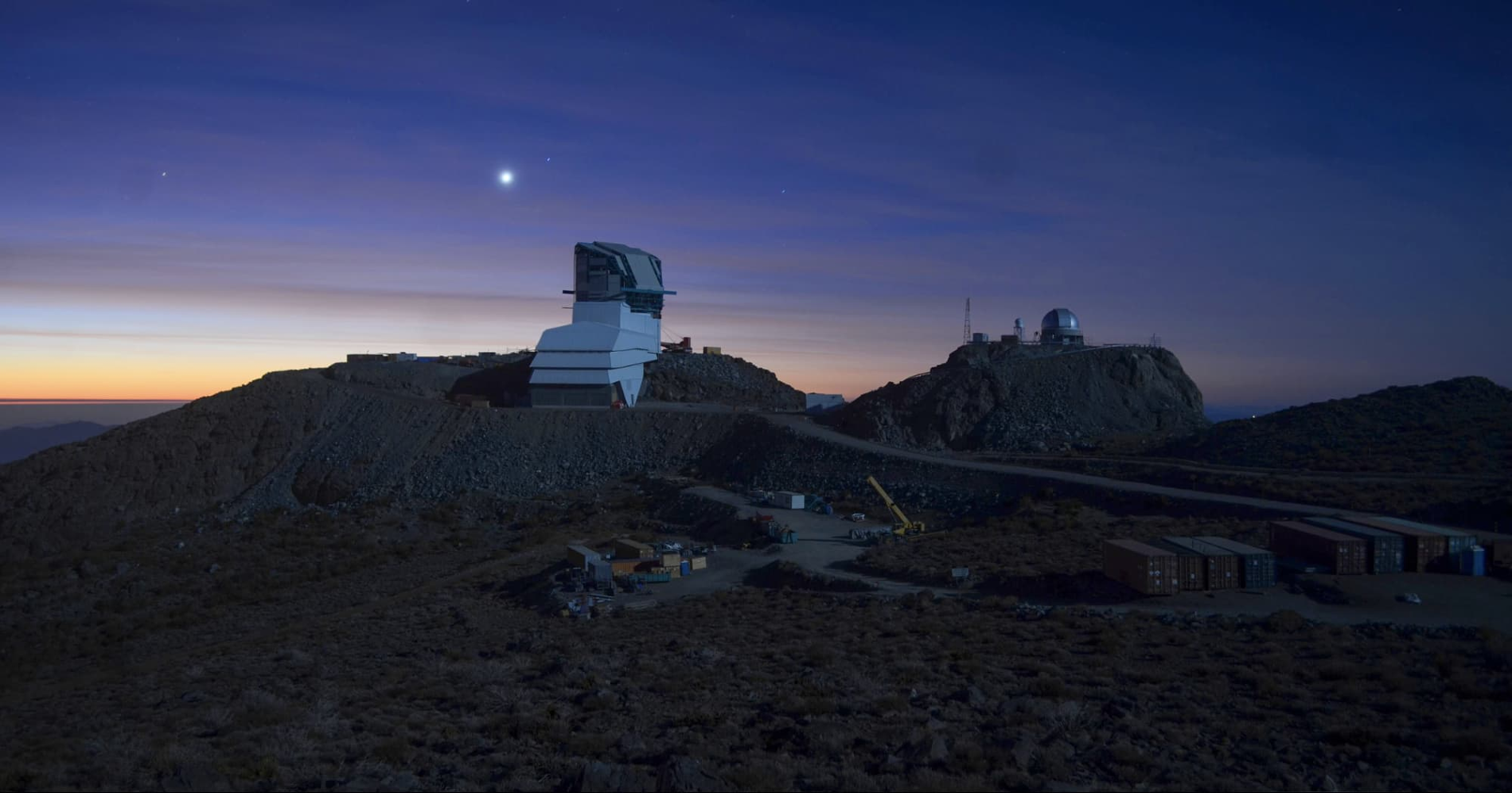
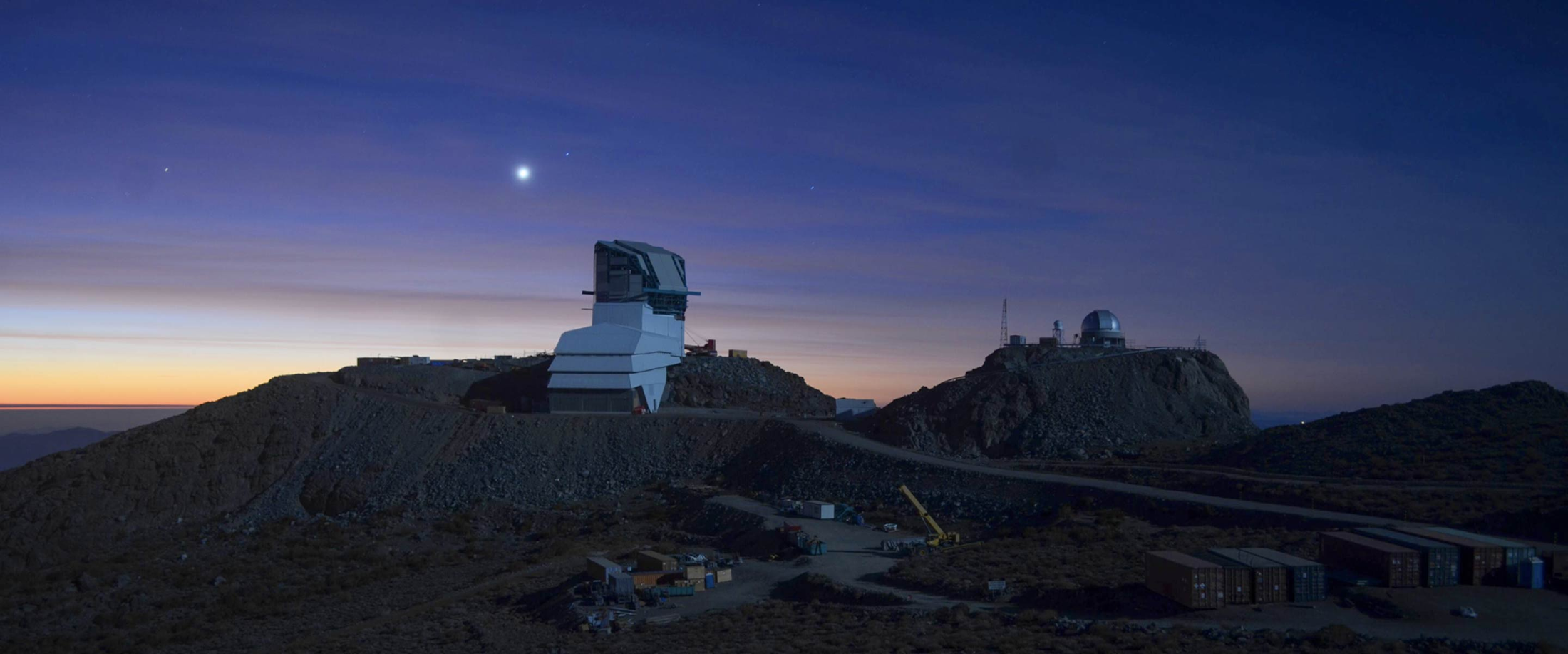
Rubin Observatory.jpg
Rubin Observatory at sunset, lit by a full moon


Caltech researcher discovers new comet with AI

While comet sightings are relatively common, the discovery of a new comet is rare. The Minor Planet Center, which tracks the solar system’s minor bodies in space, cataloged fewer than 100 new comets in 2019, as opposed to about 21,000 new minor planets.

In late August 2020, Dr. Dmitry Duev, research scientist in the Astronomy department at Caltech, began a pilot program to use Google Cloud’s tools to identify the objects observed by the Zwicky Transient Facility (ZTF) at the Palomar Observatory in Southern California. The ZTF scans the Northern skies every clear night, measuring billions of astronomical objects and registering millions of transient events. Using these images, Duev trained an ML model on Google Cloud to pinpoint comets with over 99% accuracy. On October 7, the model identified Comet C/2020 T2, the first ever such discovery attributed to artificial intelligence. This achievement makes the discovery of new comets possible at a greatly accelerated rate.

Read More  Alibaba Cloud Named A Leader In FaaS Platforms Report By Independent Research Firm

“Having a fast and accurate way to classify objects we see in the sky is revolutionizing our field,” Duev says. “It’s like having a myriad of highly trained astronomers at our disposal 24/7.”
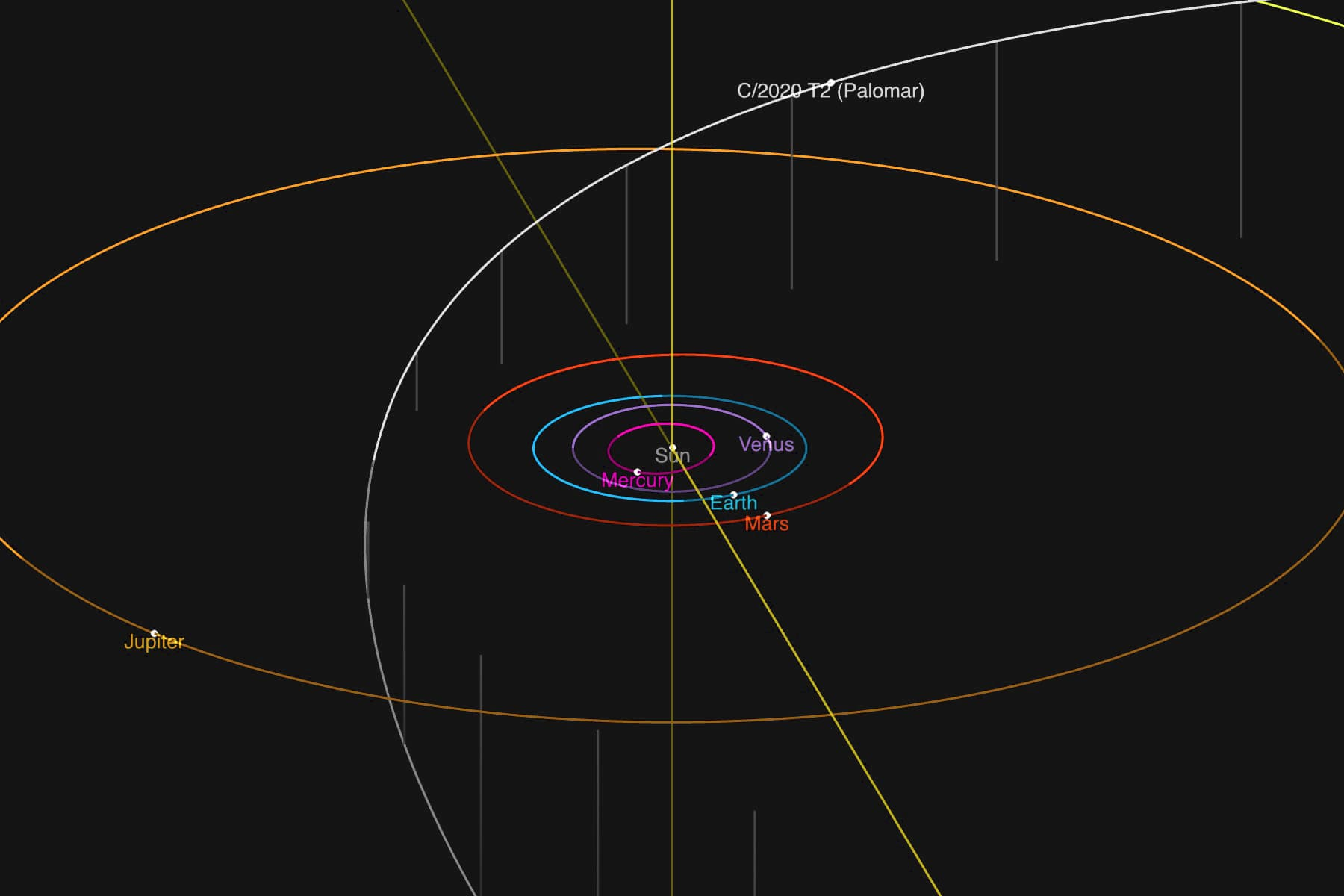
orbit of comet C_2020 T2.jpg
The orbit of comet C/2020 T2 as of October 7, 2020.Image credit: NASA/JPL-Caltech / D. Duev.


Interested in using Google Cloud to unlock the secrets of the universe?

These are just a few of the fascinating projects we’re working on with our customers in astronomy. In April 2019, the Event Horizon Telescope, a virtual combination of eight radio telescopes from all over the world, used Google Cloud’s virtual machine (VMs) instances to produce the first image of a supermassive black hole. And, since 2018, Google has also been working in partnership with the Frontier Development Lab on applying machine learning to some of NASA’s most challenging problems in our universe: forecasting floods here on Earth, finding minerals on the moon to support a permanent base there, and predicting solar flares that can interrupt satellite communications.

To start or ramp up your own project, we offer research credits to academics using Google Cloud for qualifying projects in eligible countries. You can find our application form on Google Cloud’s website or contact our sales team. To learn more about powering research in astronomy and other fields, register for the Google Cloud Public Sector Summit which features many research sessions. The sessions launch December 8-9 and will also be available on demand.


By Mike Daniels Vice President, Global Public Sector, Google Cloud
Source: Google Cloud Blog


For enquiries, product placements, sponsorships, and collaborations, connect with us at [email protected]. We'd love to hear from you!

Our humans need coffee too! Your support is highly appreciated, thank you!

aster.cloud

Related Topics
  • Astronomy
  • Caltech
  • GKE
  • Google Cloud
  • Google Cloud Storage
  • Google Kubernetes Engine
You May Also Like
View Post
  • Public Cloud

Connecting AI agents with unstructured data using Google Cloud Storage MCP Servers

  • June 10, 2026
Data center
View Post
  • Data
  • Public Cloud

Data Sovereignty in Spain. It’s Not Just About the Law, It’s About Efficiency

  • June 3, 2026
View Post
  • Data
  • Platforms
  • Public Cloud

PayPal’s historically large data migration is the foundation for its gen AI innovation

  • March 4, 2026
Google Cloud and ElevenLabs
View Post
  • Public Cloud
  • Technology

ElevenLabs Partners with Google Cloud for Cloud Services and the Latest NVIDIA Blackwell GPUs

  • February 26, 2026
View Post
  • Public Cloud

Delivering a secure, open, and sovereign digital world

  • February 12, 2026
Smartphone hero image
View Post
  • Gears
  • Tech

Zed Approves | Smartphones for Every Budget Range

  • January 29, 2026
View Post
  • Public Cloud

Formula E and Google Cloud Announce Multi-Year ‘Principal Partnership’

  • January 26, 2026
View Post
  • Public Cloud

Sawasdee Thailand! Google Cloud launches new region in Bangkok

  • January 23, 2026

Stay Connected!
LATEST
  • 1
    Expectations vs. Reality: The AI We Thought We’d Have in 10 Years
    • June 19, 2026
  • digital-nomad-freelancer-worker-2151205464 2
    One paperwork problem – Get your Digital Nomad Visa employment documents fast from UK, EU or Singapore
    • June 16, 2026
  • 3
    Samsung Art Store Brings Art Basel to Homes Worldwide With New Curated Collection
    • June 15, 2026
  • 4
    You Do Not Need to Invest in the IPO of SpaceX, Anthropic, and OpenAI
    • June 10, 2026
  • 5
    The consequences of relying on AI for accurate news
    • June 10, 2026
  • 6
    Connecting AI agents with unstructured data using Google Cloud Storage MCP Servers
    • June 10, 2026
  • 7
    WWDC26: Apple unveils next generation of Apple Intelligence, Siri AI, powerful parental controls, and an expansive set of software improvements
    • June 8, 2026
  • 8
    IBM and Google Cloud Announce Strategic Partnership to Scale AI with Human Expertise and AI‑Powered Delivery
    • June 4, 2026
  • Data center 9
    Data Sovereignty in Spain. It’s Not Just About the Law, It’s About Efficiency
    • June 3, 2026
  • 10
    Ink vs Pixels. What you miss versus what you are actually missing.
    • June 1, 2026
about
Hello World!

We are aster.cloud. We’re created by programmers for programmers.

Our site aims to provide guides, programming tips, reviews, and interesting materials for tech people and those who want to learn in general.

We would like to hear from you.

If you have any feedback, enquiries, or sponsorship request, kindly reach out to us at:

[email protected]
Most Popular
  • 1
    Banks race to patch new cyber vulnerabilities, and other cybersecurity news
    • May 25, 2026
  • pope-leo-xiv-cq5dam-1500.844 2
    Pope Leo XIV to Publish First Encyclical on Artificial Intelligence and Human Dignity on 25 May
    • May 22, 2026
  • 3
    Portfolio to Clients, and is Strengthened by Ongoing Project Glasswing Work
    • May 20, 2026
  • reMarkable Paper Pure 4
    Everything The reMarkable Paper Pure Actually Does
    • May 14, 2026
  • 5
    Scaling cloud and AI: Microsoft Azure’s commitment to Europe’s digital future
    • May 11, 2026
  • /
  • Technology
  • Tools
  • About
  • Contact Us

Input your search keywords and press Enter.