aster.cloud aster.cloud
  • /
  • Platforms
    • Public Cloud
    • On-Premise
    • Hybrid Cloud
    • Data
  • Architecture
    • Design
    • Solutions
    • Enterprise
  • Engineering
    • Automation
    • Software Engineering
    • Project Management
    • DevOps
  • Programming
    • Learning
  • Tools
  • About
  • /
  • Platforms
    • Public Cloud
    • On-Premise
    • Hybrid Cloud
    • Data
  • Architecture
    • Design
    • Solutions
    • Enterprise
  • Engineering
    • Automation
    • Software Engineering
    • Project Management
    • DevOps
  • Programming
    • Learning
  • Tools
  • About
aster.cloud aster.cloud
  • /
  • Platforms
    • Public Cloud
    • On-Premise
    • Hybrid Cloud
    • Data
  • Architecture
    • Design
    • Solutions
    • Enterprise
  • Engineering
    • Automation
    • Software Engineering
    • Project Management
    • DevOps
  • Programming
    • Learning
  • Tools
  • About
  • Data
  • Engineering
  • Programming
  • Software Engineering

How-To: Install and Configure MongoDB Community on Ubuntu 20.04

  • aster.cloud
  • September 6, 2022
  • 3 minute read

The following guide shows installation and configuration of MongoDB 6.0 (the latest version at the time of this is published) on Ubuntu 20.04. Also note that MongoDB 6.0 is not yet officially supported on Ubuntu 22.04.


Partner with aster.cloud
for your next big idea.
Let us know here.


From our partners:

CITI.IO :: Business. Institutions. Society. Global Political Economy.
CYBERPOGO.COM :: For the Arts, Sciences, and Technology.
DADAHACKS.COM :: Parenting For The Rest Of Us.
ZEDISTA.COM :: Entertainment. Sports. Culture. Escape.
TAKUMAKU.COM :: For The Hearth And Home.
ASTER.CLOUD :: From The Cloud And Beyond.
LIWAIWAI.COM :: Intelligence, Inside and Outside.
GLOBALCLOUDPLATFORMS.COM :: For The World's Computing Needs.
FIREGULAMAN.COM :: For The Fire In The Belly Of The Coder.
ASTERCASTER.COM :: Supra Astra. Beyond The Stars.
BARTDAY.COM :: Prosperity For Everyone.

Prerequisites

  • Operating System: Ubuntu 20.04
  • Command Line Interface or Terminal


Installation


01. Open a terminal window


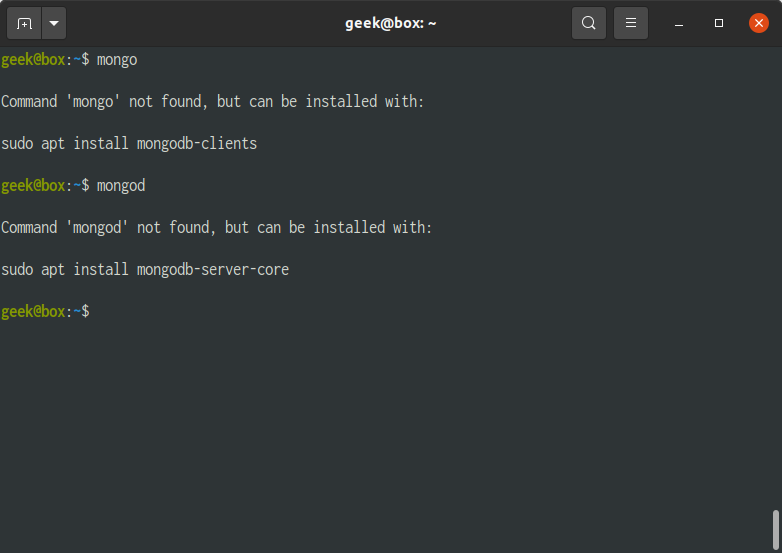
02. Check if MongoDB is already installed. Execute the following to determine.

$ mongo

and

$ mongod


It should show some suggestions on how to install MongoDB.
 

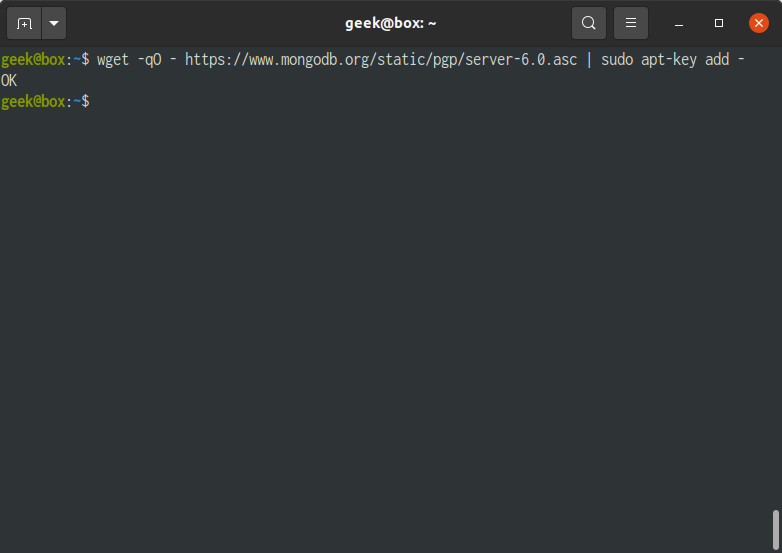
03. At the CLI, import the public key used by the package management system. This will install an official version of MongoDB.

$ wget -qO - https://www.mongodb.org/static/pgp/server-6.0.asc | sudo apt-key add -
 

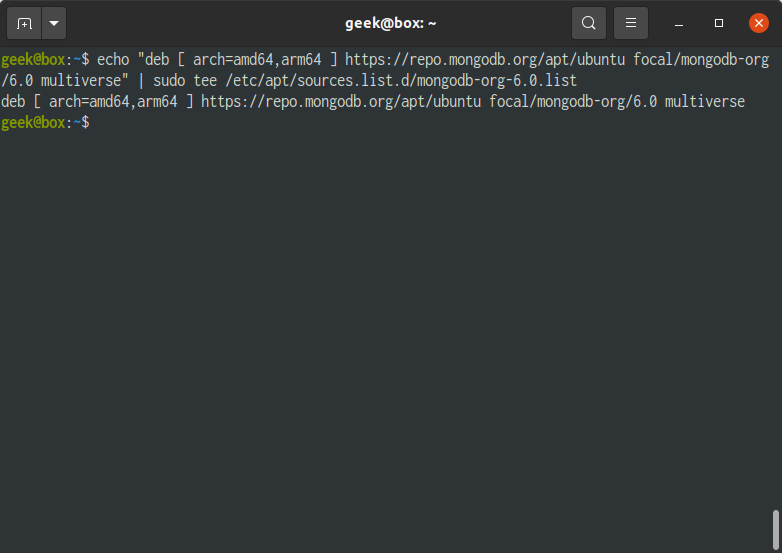
04. Create a list file for MongoDB

$ echo "deb [ arch=amd64,arm64 ] https://repo.mongodb.org/apt/ubuntu focal/mongodb-org/6.0 multiverse" | sudo tee /etc/apt/sources.list.d/mongodb-org-6.0.list
 

05. Reload local package database.

$ sudo apt update


06. Install the MongoDB packages.

$ sudo apt install mongodb-org -y
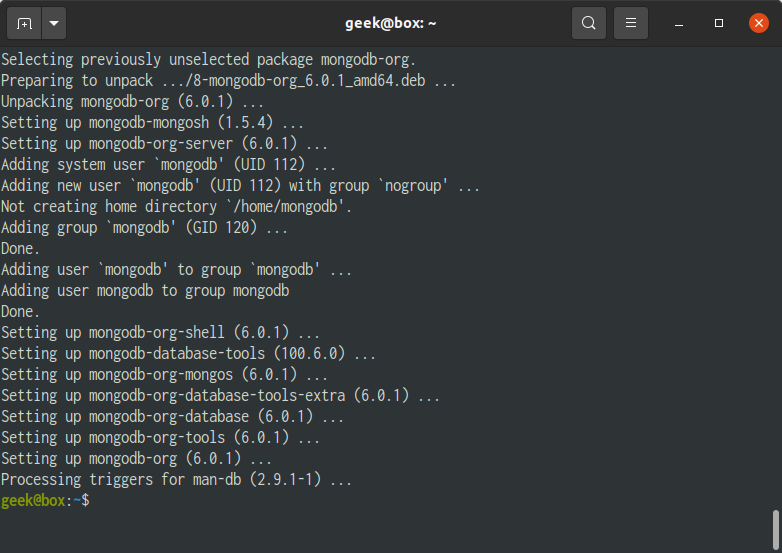
 

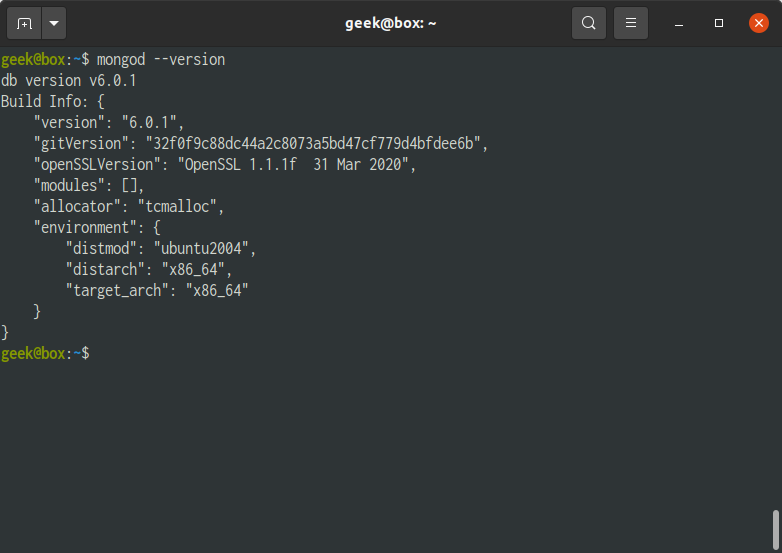
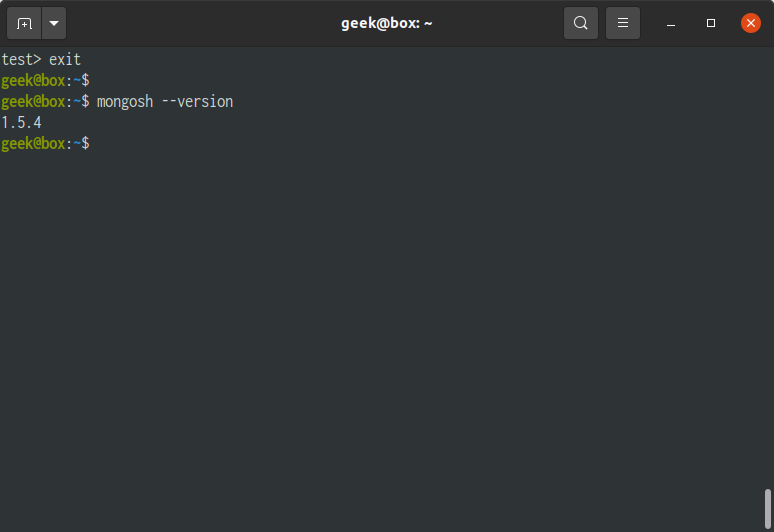
07. Check the version. If the version is returned, this means that MongoDB has been installed correctly.


Since starting MongoDB 6.0, the mongo command has been replaced with mongosh. For the compatibility changes see here.

$ mongod --version

or

$ mongosh --version


08. Configure MongoDB to start on system boot.

$ sudo systemctl enable mongod.service
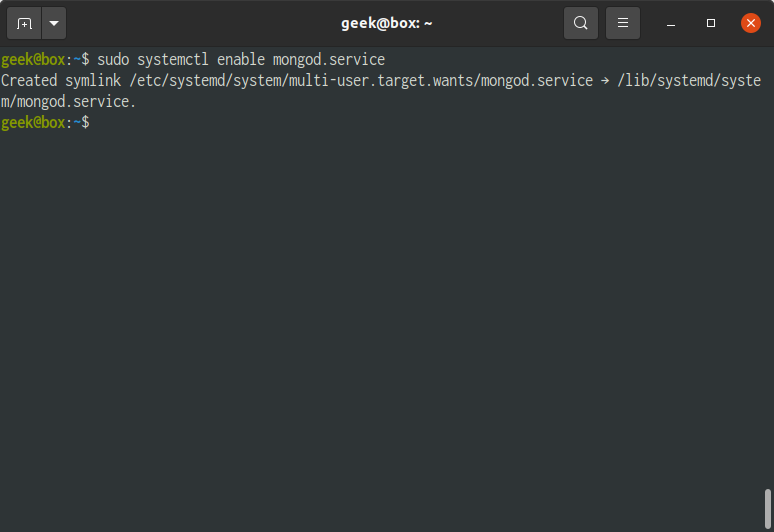
 

09. Connect to the Mongo shell.

$ mongosh
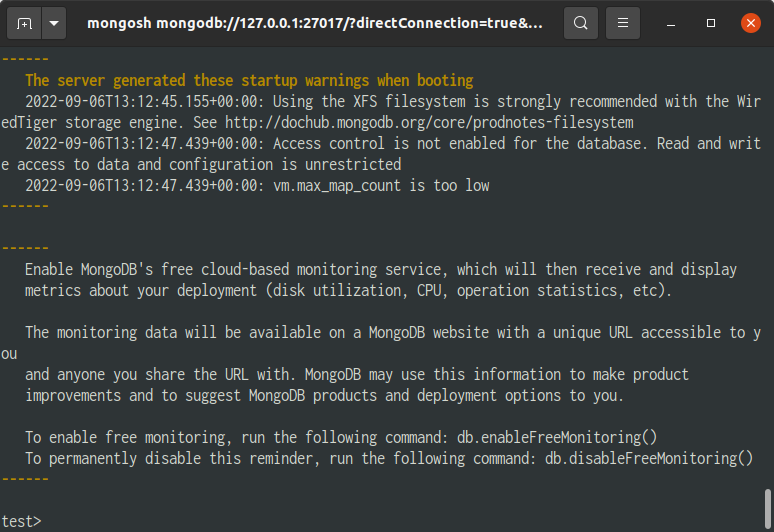
 

Enter exit to escape from the mongo shell.

test> exit


If you are unable to connect to the mongo shell. Try restarting the mongod service.

$ sudo service mongod restart


Changing the MongoDB Port


Changing the default port of MongoDB provides a first line of defence against unwanted intruders. While it isn’t a sure-way for deferring against bots that sweep through ports that try to access the database, it prevents them from trying to access the database using the default port. For security it is better to enable other mechanisms such as creating database users that have specific roles and access to databases with credentials.

Read More  Oppenheimer: July 28 Panel Discussion Focuses On The Man Behind The Movie


01. Edit the MongoDB configuration file

$ sudo nano /etc/mongod.conf


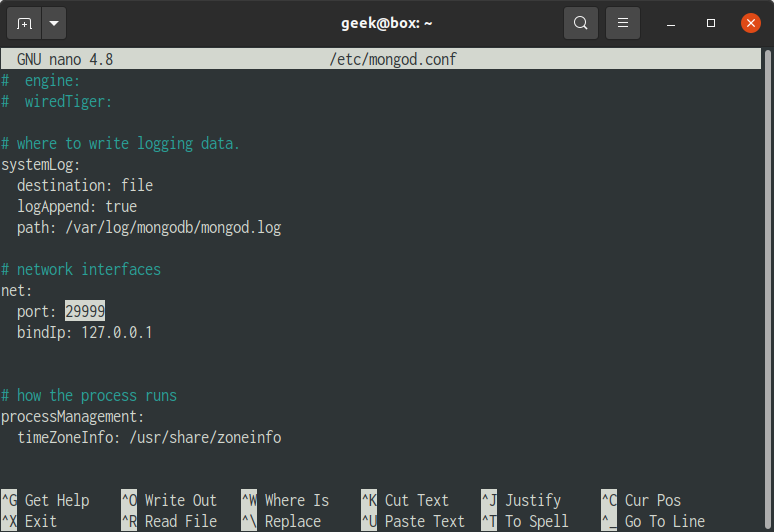
02. While on the nano interface, press Ctrl+W (or command for Mac)  to search for the text, “network interfaces”. Then press Enter.
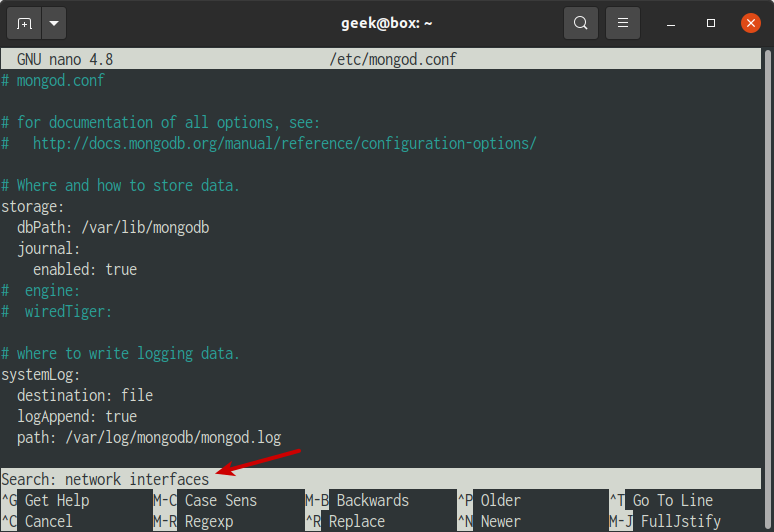
 

In this example change the port to 29999. After changing the port, Press Ctrl+O (or command for Mac), then Enter. Ctrl+X to exit the nano editor.
 

03. Restart MongoDB service to apply the changes

$ sudo service mongod restart


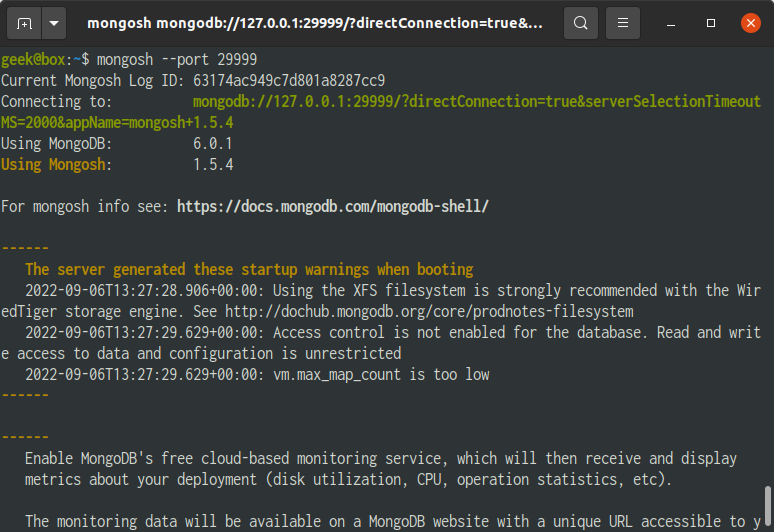
04. After restart, you cannot connect to the MongoDB using the default mongod command. Instead you have to identify the port.

$ mongosh --port 29999
 

Adding Authentication


While for development purposes the current setup will suffice. But for production it is recommended to enable authentication and add a db user with password for security.


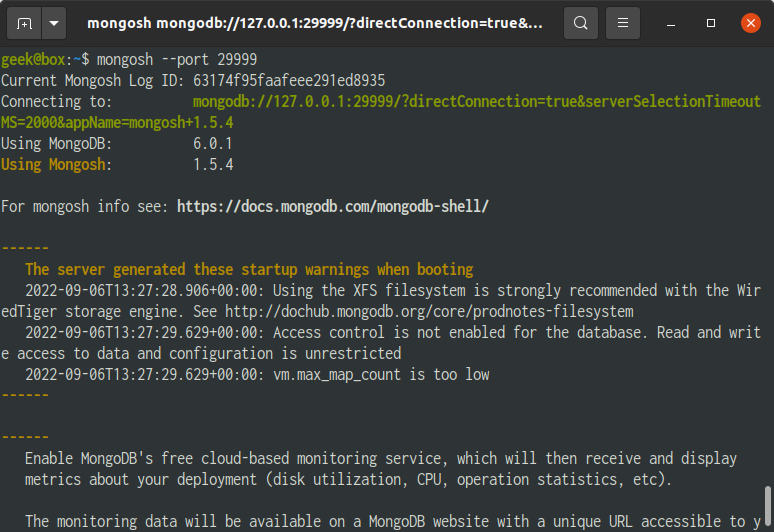
01. Access the MongoDB shell

$ mongosh
# or if port has been changed$ mongosh --port <new-mongodb-port>
 

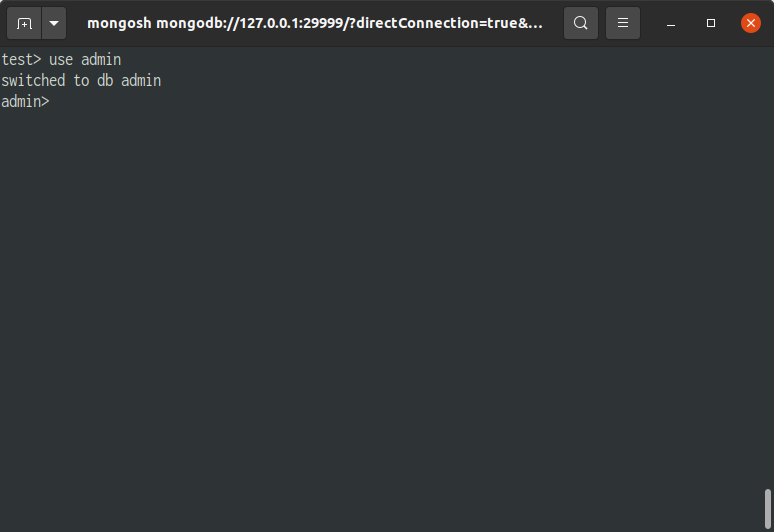
02. Switch to the admin database

> use admin
 

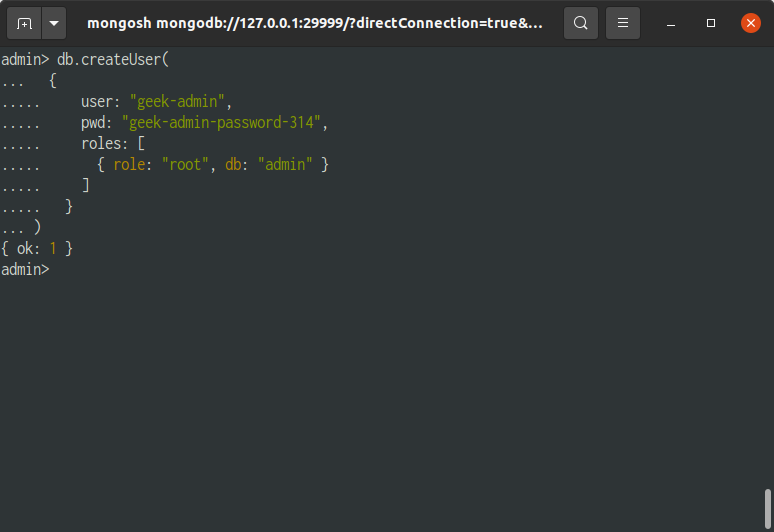
03. Create a Root user account. On the MongoDB shell, execute the following. Replace the geek-admin and geek-admin-password-314 with your preferred credentials.


Note that roles here should be configured as needed. In this example, we are using the root role. For the list of roles see the following link : https://docs.mongodb.com/manual/reference/built-in-roles/

db.createUser(  {    user: "geek-admin",    pwd: "geek-admin-password-314",    roles: [       { role: "root", db: "admin" }     ]  })


It should show something similar. This shows that the user has been added.
 

Exit from the mongo shell.

admin> exit


04. Edit the MongoDB configuration file

$ sudo nano /etc/mongod.conf


Read More  Key Customer Benefits Of The Microsoft And MongoDB Expanded Partnership

05. While on the nano interface, press Ctrl+W (or command for Mac)  to search for the text, “security”. Then press Enter.
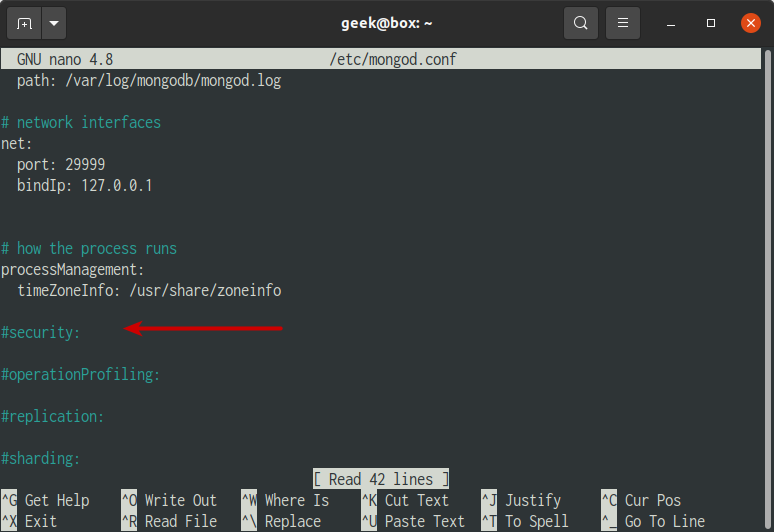
 

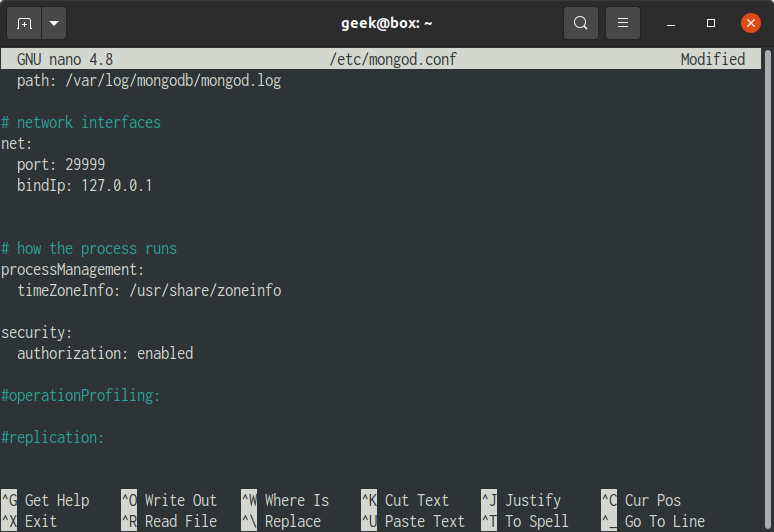
06. Update the following lines on the #security section.

security:  authorization: enabled
 

07. Restart the MongoDB service.

$ sudo service mongod restart


or restart the MongoDB instance with access control

admin> db.adminCommand({shutdown:1})


08. Test the new user by using the following authentication command.

$ mongosh --port 29999 --username geek-admin --password geek-admin-password-314 --authenticationDatabase admin


Insert a new document or record.

test> db.new_db.insertOne({'greeting':'hi'})
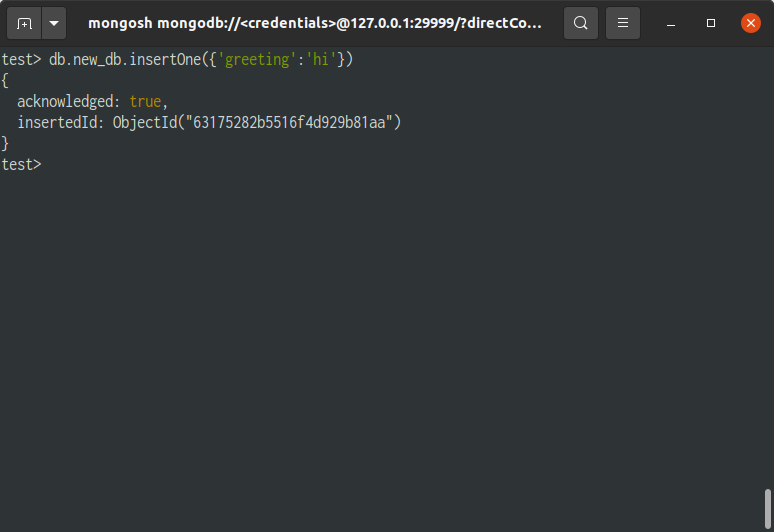
 

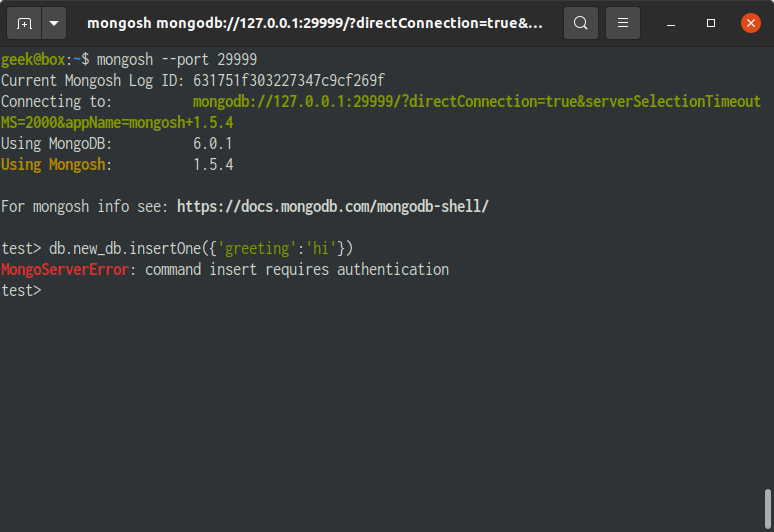
09. To test if authentication is really working, try the following. It access the mongo shell without any authentication and is given an error when interacting with the database.

$ mongosh --port 29999 
test> db.new_db.insertOne({'greeting':'hi'})
Appendix

Start MongoDB service

$ sudo service mongod start

  Restart MongoDB service

$ sudo service mongod restart

  Stop MongoDB service

$ sudo service mongod stop


For enquiries, product placements, sponsorships, and collaborations, connect with us at [email protected]. We'd love to hear from you!

Our humans need coffee too! Your support is highly appreciated, thank you!

aster.cloud

Related Topics
  • Databases
  • MongoDB
  • MongoDB 6
  • Tutorials
  • Ubuntu
  • Ubuntu 20.04
You May Also Like
Data center
View Post
  • Data
  • Public Cloud

Data Sovereignty in Spain. It’s Not Just About the Law, It’s About Efficiency

  • June 3, 2026
View Post
  • Data
  • Platforms
  • Technology

Scaling cloud and AI: Microsoft Azure’s commitment to Europe’s digital future

  • May 11, 2026
View Post
  • Data

Streamline read scalability with Cloud SQL autoscaling read pools

  • March 23, 2026
View Post
  • Data
  • Platforms
  • Public Cloud

PayPal’s historically large data migration is the foundation for its gen AI innovation

  • March 4, 2026
View Post
  • Data
  • Technology

3 obstacles to agentic AI adoption and how to overcome them

  • December 22, 2025
Points, Lines and a Question
View Post
  • Architecture
  • Design
  • Engineering
  • People

What Is The Point In Making Points?

  • November 26, 2025
View Post
  • Software Engineering

Embedded Swift Improvements Coming in Swift 6.3

  • November 22, 2025
Visual Studio Code
View Post
  • Software Engineering

Visual Studio 2026 is here: faster, smarter, and a hit with early adopters

  • November 12, 2025

Stay Connected!
LATEST
  • digital-nomad-freelancer-worker-2151205464 1
    One paperwork problem – Get your Digital Nomad Visa employment documents fast from UK, EU or Singapore
    • June 16, 2026
  • 2
    Samsung Art Store Brings Art Basel to Homes Worldwide With New Curated Collection
    • June 15, 2026
  • 3
    You Do Not Need to Invest in the IPO of SpaceX, Anthropic, and OpenAI
    • June 10, 2026
  • 4
    The consequences of relying on AI for accurate news
    • June 10, 2026
  • 5
    Connecting AI agents with unstructured data using Google Cloud Storage MCP Servers
    • June 10, 2026
  • 6
    WWDC26: Apple unveils next generation of Apple Intelligence, Siri AI, powerful parental controls, and an expansive set of software improvements
    • June 8, 2026
  • 7
    IBM and Google Cloud Announce Strategic Partnership to Scale AI with Human Expertise and AI‑Powered Delivery
    • June 4, 2026
  • Data center 8
    Data Sovereignty in Spain. It’s Not Just About the Law, It’s About Efficiency
    • June 3, 2026
  • 9
    Ink vs Pixels. What you miss versus what you are actually missing.
    • June 1, 2026
  • 10
    Banks race to patch new cyber vulnerabilities, and other cybersecurity news
    • May 25, 2026
about
Hello World!

We are aster.cloud. We’re created by programmers for programmers.

Our site aims to provide guides, programming tips, reviews, and interesting materials for tech people and those who want to learn in general.

We would like to hear from you.

If you have any feedback, enquiries, or sponsorship request, kindly reach out to us at:

[email protected]
Most Popular
  • pope-leo-xiv-cq5dam-1500.844 1
    Pope Leo XIV to Publish First Encyclical on Artificial Intelligence and Human Dignity on 25 May
    • May 22, 2026
  • 2
    Portfolio to Clients, and is Strengthened by Ongoing Project Glasswing Work
    • May 20, 2026
  • reMarkable Paper Pure 3
    Everything The reMarkable Paper Pure Actually Does
    • May 14, 2026
  • 4
    Scaling cloud and AI: Microsoft Azure’s commitment to Europe’s digital future
    • May 11, 2026
  • Anthropic Institute 5
    Introducing The Anthropic Institute
    • March 11, 2026
  • /
  • Technology
  • Tools
  • About
  • Contact Us

Input your search keywords and press Enter.