aster.cloud aster.cloud
  • /
  • Platforms
    • Public Cloud
    • On-Premise
    • Hybrid Cloud
    • Data
  • Architecture
    • Design
    • Solutions
    • Enterprise
  • Engineering
    • Automation
    • Software Engineering
    • Project Management
    • DevOps
  • Programming
    • Learning
  • Tools
  • About
  • /
  • Platforms
    • Public Cloud
    • On-Premise
    • Hybrid Cloud
    • Data
  • Architecture
    • Design
    • Solutions
    • Enterprise
  • Engineering
    • Automation
    • Software Engineering
    • Project Management
    • DevOps
  • Programming
    • Learning
  • Tools
  • About
aster.cloud aster.cloud
  • /
  • Platforms
    • Public Cloud
    • On-Premise
    • Hybrid Cloud
    • Data
  • Architecture
    • Design
    • Solutions
    • Enterprise
  • Engineering
    • Automation
    • Software Engineering
    • Project Management
    • DevOps
  • Programming
    • Learning
  • Tools
  • About
  • Engineering
  • Technology

Run Google Cloud Speech AI Locally, No Internet Connection Required

  • aster.cloud
  • November 16, 2022
  • 3 minute read
We’ve all been there— asking a voice assistant to play a song, launch an app, or answer a question, but the assistant doesn’t comply. Maybe it’s a network outage, or maybe you’re in the middle of nowhere, far away from coverage—either way the result is the same: the voice assistant can’t connect to the server and thus cannot help.With our Speech-to-Text (STT) API now processing over 1 billion minutes of speech each month, it’s clear that voice assistants — and Automatic Voice Recognition (ASR) in general — are essential to how millions of people make decisions and navigate their lives. Typically, however, to successfully provide high-quality speech results to consumers, the AI systems responsible for ASR have needed a stable cloud connection to specialized hardware.With Speech On-Device, which went into GA at Google Cloud Next ‘22, we’re excited to embed the powerful speech recognition available in the cloud for a variety of new use cases in environments with inconsistent, little, or no internet connectivity. These on-device Speech-to-Text and Text-to-Speech technologies have already been used in Google Assistant, but with Speech On-Device, a new generation of apps and services can harness this technology.

Build speech experiences with–or without–network connectivity

From cars that drive through tunnels, to apps running on integrated devices like kiosks, to IoT devices, Speech On-Device delivers server-quality voice capabilities with a fraction of the processing power—all while helping to maintain privacy by keeping data on the local device.


Partner with aster.cloud
for your next big idea.
Let us know here.


From our partners:

CITI.IO :: Business. Institutions. Society. Global Political Economy.
CYBERPOGO.COM :: For the Arts, Sciences, and Technology.
DADAHACKS.COM :: Parenting For The Rest Of Us.
ZEDISTA.COM :: Entertainment. Sports. Culture. Escape.
TAKUMAKU.COM :: For The Hearth And Home.
ASTER.CLOUD :: From The Cloud And Beyond.
LIWAIWAI.COM :: Intelligence, Inside and Outside.
GLOBALCLOUDPLATFORMS.COM :: For The World's Computing Needs.
FIREGULAMAN.COM :: For The Fire In The Belly Of The Coder.
ASTERCASTER.COM :: Supra Astra. Beyond The Stars.
BARTDAY.COM :: Prosperity For Everyone.

Running locally is made possible by new modeling techniques, on both the Speech-to-Text (STT) and Text-to-Speech (TTS) fronts.

For Speech-to-Text (or ASR), years of work on our end-to-end Speech models, such as our latest conformer models, has decreased the size and compute necessary to run fully-featured speech models. These advancements have resulted in quality comparable to that of a server, while still allowing for models that are lightweight enough to run on local devices CPUs.

Read More  How To Keep Sensitive Data Out Of Your Chatbots

For Text-to-Speech, we leverage new technology developed at Google to bring high-quality voice into vehicles. Speech On-Device TTS not only provides acoustic quality comparable to our WaveNet technology, DeepMind’s breakthrough model for generating more natural-sounding speech, but it also is significantly less computationally demanding and can easily run on embedded CPUs without the need for accelerators.
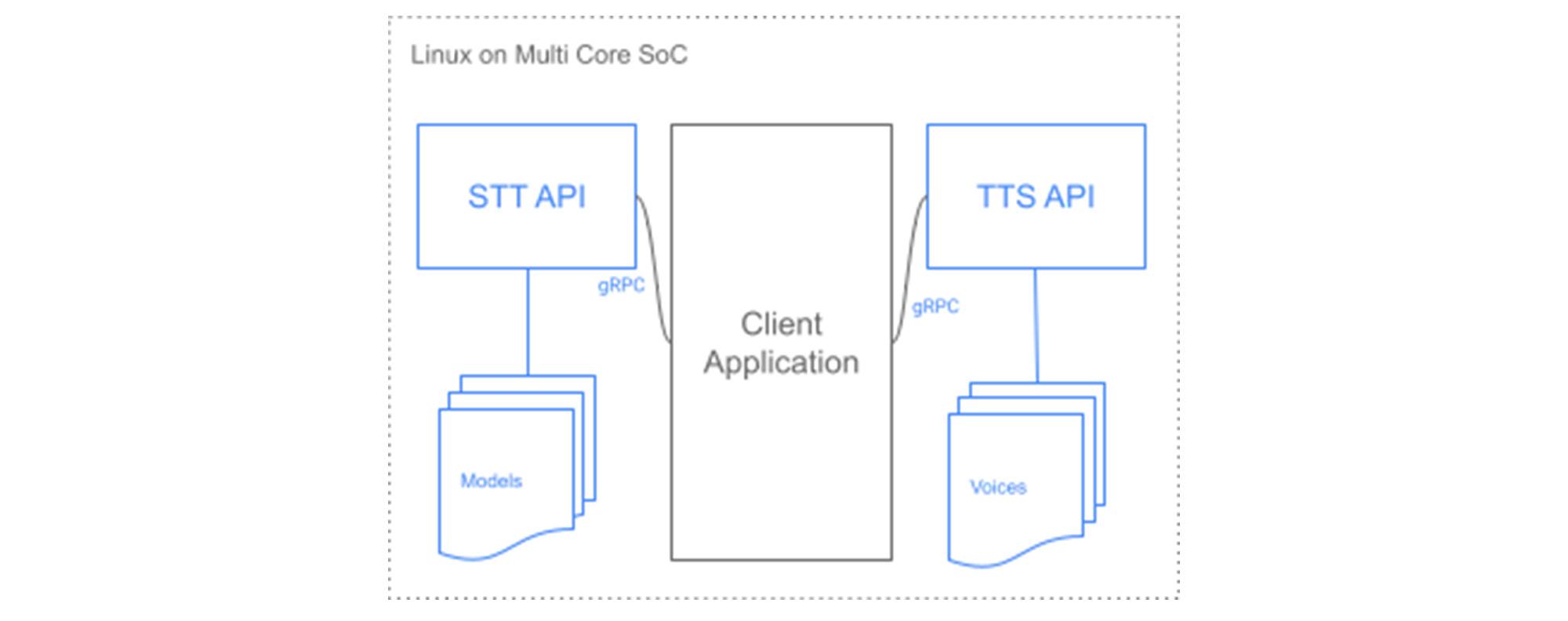
Speech On-Device is easy for developers to get started with. Each system (STT and TTS) provides customers with a binary, built for their specific hardware, operating system, and software environment. This binary exposes a local gRPC interface that other services on the device can talk to, making it easy for multiple services to access speech recognition or speech synthesis as they need to, without additional libraries or integration.Each model is only a couple hundred megabytes in size. The entire system can run on the single core of a modern ARM-based System on Chip (SoC) while still achieving latencies usable for real-time interactions. This means it can be added to existing systems without worrying about acceleration or optimization. And, as with all Cloud Speech-to-Text API models, Speech On-Device is built to work directly out-of-the-box, with no training or customization necessary.

Join the Google Cloud customers already using Speech On-Device

We’re excited to see the new speech-driven experiences that organizations will build with this service—especially after seeing Speech On-Device’s early adopters in action. For example, Toyota is leveraging Speech On-Device as Ryan Wheeler — Vice President, Machine Learning at Toyota Connected North America — discussed in a Google Cloud Next ‘22 session.

Read More  Cloud vs. local backup: Which is right for your organization?

If you are interested in Speech On-Device, there is a review process to help assess whether your use case is aligned with our best practices.To get started, contact your seller today.


By: Calum Barnes (Head of Product, Cloud Speech)
Source: Google Cloud Blog


For enquiries, product placements, sponsorships, and collaborations, connect with us at [email protected]. We'd love to hear from you!

Our humans need coffee too! Your support is highly appreciated, thank you!

aster.cloud

Related Topics
  • Artificial Intelligence
  • Cloud Speech AI
  • Google Cloud
  • Machine Learning
  • Speech-to-Text
  • Text-to-Speech
You May Also Like
View Post
  • Gears
  • Technology

Apple unveils new iMac with M6, delivering a major boost in performance and AI capabilities

  • October 27, 2026
View Post
  • Technology

IBM and Siemens Collaborate on Research to Advance Nanostack Architecture

  • October 14, 2026
View Post
  • Technology

Accenture and Google Cloud Transform Software Development with Volvo Cars

  • September 22, 2026
View Post
  • Data
  • Technology

Synthetic data could ease people’s concerns about privacy breaches. But who gets to create it?

  • September 15, 2026
View Post
  • Computing
  • Multi-Cloud
  • Technology

Multi-cloud with AWS and Azure just got a whole lot easier thanks to a new interconnect service

  • September 2, 2026
View Post
  • Computing
  • Multi-Cloud
  • Technology

VMware targets ‘three core AI cost drivers’ with new Private AI Cloud service

  • September 2, 2026
View Post
  • Computing
  • Multi-Cloud
  • Technology

Agentic AI is spurring a ‘fundamental shift’ in cloud infrastructure consumption

  • August 17, 2026
View Post
  • Computing
  • Multi-Cloud
  • Technology

Why real SaaS resilience means breaking free of the hyperscaler

  • August 11, 2026

Stay Connected!
LATEST
  • 1
    Apple unveils groundbreaking MacBook Pro with PROLED XDR Display and Touch for the first time on Mac
    • October 28, 2026
  • 2
    Apple introduces the new 14‑inch MacBook Pro with M6
    • October 27, 2026
  • 3
    Apple unveils new iMac with M6, delivering a major boost in performance and AI capabilities
    • October 27, 2026
  • 4
    IBM and Siemens Collaborate on Research to Advance Nanostack Architecture
    • October 14, 2026
  • 5
    Chinese tech giant Huawei unveils Mate 90 series smartphones with flagship Tau chips adopting logic folding technology
    • October 2, 2026
  • 6
    IBM Acquires Logiq Consulting to Expand Secure Digital Transformation and Cybersecurity Capabilities in the UK
    • September 24, 2026
  • 7
    Accenture and Google Cloud Transform Software Development with Volvo Cars
    • September 22, 2026
  • 8
    Synthetic data could ease people’s concerns about privacy breaches. But who gets to create it?
    • September 15, 2026
  • 9
    Apple Flagship Hardware Launch for September 2026
    • September 10, 2026
  • 10
    Multi-cloud with AWS and Azure just got a whole lot easier thanks to a new interconnect service
    • September 2, 2026
about
Hello World!

We are aster.cloud. We’re created by programmers for programmers.

Our site aims to provide guides, programming tips, reviews, and interesting materials for tech people and those who want to learn in general.

We would like to hear from you.

If you have any feedback, enquiries, or sponsorship request, kindly reach out to us at:

[email protected]
Most Popular
  • 1
    Broadcom eyes security, performance boosts with vDefend and Avi Load Balancer updates
    • August 7, 2026
  • Why real SaaS resilience means breaking free of the hyperscaler
    • August 11, 2026
  • Agentic AI is spurring a ‘fundamental shift’ in cloud infrastructure consumption
    • August 17, 2026
  • 4
    VMware targets ‘three core AI cost drivers’ with new Private AI Cloud service
    • September 2, 2026
  • 5
    Digital sovereignty in the age of AI: You don’t have to choose between control and innovation
    • August 10, 2026
  • /
  • Technology
  • Tools
  • About
  • Contact Us

Input your search keywords and press Enter.