aster.cloud aster.cloud
  • /
  • Platforms
    • Public Cloud
    • On-Premise
    • Hybrid Cloud
    • Data
  • Architecture
    • Design
    • Solutions
    • Enterprise
  • Engineering
    • Automation
    • Software Engineering
    • Project Management
    • DevOps
  • Programming
    • Learning
  • Tools
  • About
  • /
  • Platforms
    • Public Cloud
    • On-Premise
    • Hybrid Cloud
    • Data
  • Architecture
    • Design
    • Solutions
    • Enterprise
  • Engineering
    • Automation
    • Software Engineering
    • Project Management
    • DevOps
  • Programming
    • Learning
  • Tools
  • About
aster.cloud aster.cloud
  • /
  • Platforms
    • Public Cloud
    • On-Premise
    • Hybrid Cloud
    • Data
  • Architecture
    • Design
    • Solutions
    • Enterprise
  • Engineering
    • Automation
    • Software Engineering
    • Project Management
    • DevOps
  • Programming
    • Learning
  • Tools
  • About
  • People
  • Technology

Nobel prize in physics awarded for work unveiling the secrets of electrons

  • aster.cloud
  • October 4, 2023
  • 3 minute read
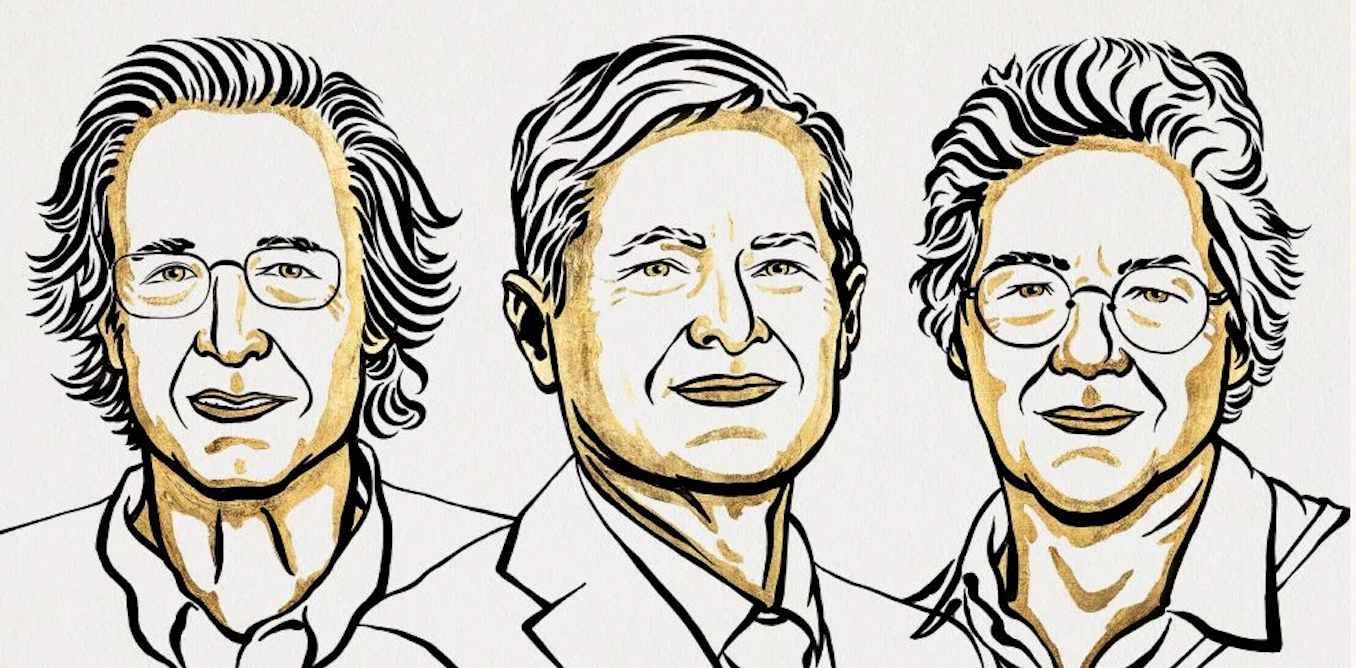
Screenshot at. Niklas Elmehed © Nobel Prize Outreach, CC BY-SA

Amelle Zaïr, King’s College London

The 2023 Nobel prize in physics has been awarded to a trio of scientists for pioneering tools used to study the world of electrons.


Partner with aster.cloud
for your next big idea.
Let us know here.


From our partners:

CITI.IO :: Business. Institutions. Society. Global Political Economy.
CYBERPOGO.COM :: For the Arts, Sciences, and Technology.
DADAHACKS.COM :: Parenting For The Rest Of Us.
ZEDISTA.COM :: Entertainment. Sports. Culture. Escape.
TAKUMAKU.COM :: For The Hearth And Home.
ASTER.CLOUD :: From The Cloud And Beyond.
LIWAIWAI.COM :: Intelligence, Inside and Outside.
GLOBALCLOUDPLATFORMS.COM :: For The World's Computing Needs.
FIREGULAMAN.COM :: For The Fire In The Belly Of The Coder.
ASTERCASTER.COM :: Supra Astra. Beyond The Stars.
BARTDAY.COM :: Prosperity For Everyone.

Electrons are sub-atomic particles that play a role in many phenomena we see every day, from electricity to magnetism. This year’s three Nobel physics laureates demonstrated a way to create extremely short pulses of light in order to investigate processes that involve electrons.

Pierre Agostini from The Ohio State University in the US, Ferenc Krausz from the Max Planck Institute of Quantum Optics in Germany and Anne L’Huillier from Lund University in Sweden will share the prize sum of 11 million Swedish kronor (£822,910).

Changes in electrons typically occur in a few tenths of an “attosecond”, which is a billionth of a billionth of a second. In order to study such brief events, special technology was needed.

The laureates developed experimental methods that produced pulses of light so short that they are measured in attoseconds. These could then be used to study the fleeting dynamics of electrons in physical matter – something that wasn’t previously possible.

The attosecond pulses, the shortest flashes of light ever produced, sparked a revolution in photonics – the science of light waves. They were used to take snapshots of electrons in different physical systems, such as in atoms, chiral molecules – molecules that are mirror images of one another – and very tiny nanoparticles among others.

The laureates have all contributed to enabling the investigation of such processes. For the first time, these quick pulses allowed scientists to match up the time scale of their observations to the natural, very fast time scales at which electron dynamics occurred.

Read More  Harness The Power Of Data And AI In Your Life Science Supply Chain

This achievement required significant innovations in laser science and engineering – innovations that this year’s Nobel laureates worked on for decades.
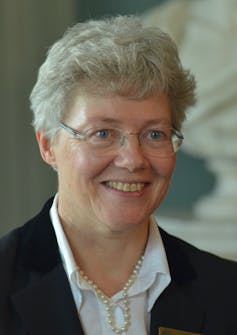
Anne L´Huiller, Lund University.

Anne L´Huiller, Lund University.
wikipedia, CC BY-SA

L’Huillier discovered a new effect that arose as the result of interactions between laser light and atoms in a gas. This interaction could be used to produce pulses of ultraviolet light that were each a few hundred attoseconds long.

Agostini and Krausz took this discovery even further. In 2001, Agostini was able to produce short light pulses and measure their width. The series of bursts produced using something called the RABBIT technique lasted just 250 attoseconds.
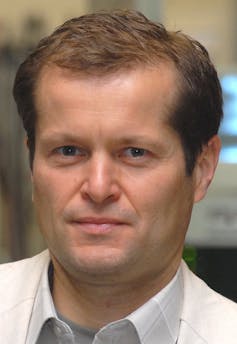
Ferenc Krausz.

Ferenc Krausz.
wikipedia, CC BY-SA

At around the same time, Krausz developed a different experimental approach, using it to successfully isolate a light pulse that lasted 650 attoseconds.

The two approaches developed by Agostini and Krausz form the basis for much attosecond research carried out today.

Exciting applications

There are some exciting potential applications for these attosecond pulses.

They could be used to study previously unknown physical phenomena in different types of material.

A spin-off area known as ultra-fast switching could also one day lead to the development of very fast-working electronics.

Attosecond pulse science could also find uses in medical diagnostics. By exposing a blood sample to a very fast pulse of light, scientists can detect tiny changes in the molecules in that sample. This could lead to a new way of diagnosing disorders, including cancer.

Our team at King’s has been working to combine the resolution on physical processes that attosecond pulses enable with novel advances in quantum information processing. This would create pulses of quantum light at the attosecond time scale that could have applications in quantum computing.

Read More  Google Cloud Next 2019 | How To Make Enterprise Search More Effective With Google Cloud Search

The award of the Nobel prize in this field inspires us to redouble our efforts to break novel ground. We wish our colleagues continued success, and we are eager to see what they will surprise us with next.The Conversation

Amelle Zaïr, Senior Lecturer of Physics, King’s College London

This article is republished from The Conversation under a Creative Commons license. Read the original article.

Source: cyberpogo.com


For enquiries, product placements, sponsorships, and collaborations, connect with us at [email protected]. We'd love to hear from you!

Our humans need coffee too! Your support is highly appreciated, thank you!

aster.cloud

Related Topics
  • Nobel Prize
  • Nobel Prize 2023
  • Physics
  • Science
  • Stockholm
  • Sweden
You May Also Like
View Post
  • Gears
  • Technology

Samsung Art Store Brings Art Basel to Homes Worldwide With New Curated Collection

  • June 15, 2026
View Post
  • Technology

The consequences of relying on AI for accurate news

  • June 10, 2026
View Post
  • Gears
  • Technology

WWDC26: Apple unveils next generation of Apple Intelligence, Siri AI, powerful parental controls, and an expansive set of software improvements

  • June 8, 2026
View Post
  • Technology

IBM and Google Cloud Announce Strategic Partnership to Scale AI with Human Expertise and AI‑Powered Delivery

  • June 4, 2026
View Post
  • Technology

Banks race to patch new cyber vulnerabilities, and other cybersecurity news

  • May 25, 2026
pope-leo-xiv-cq5dam-1500.844
View Post
  • Technology

Pope Leo XIV to Publish First Encyclical on Artificial Intelligence and Human Dignity on 25 May

  • May 22, 2026
View Post
  • Technology

Portfolio to Clients, and is Strengthened by Ongoing Project Glasswing Work

  • May 20, 2026
reMarkable Paper Pure
View Post
  • Gears
  • Technology

Everything The reMarkable Paper Pure Actually Does

  • May 14, 2026

Stay Connected!
LATEST
  • digital-nomad-freelancer-worker-2151205464 1
    One paperwork problem – Get your Digital Nomad Visa employment documents fast from UK, EU or Singapore
    • June 16, 2026
  • 2
    Samsung Art Store Brings Art Basel to Homes Worldwide With New Curated Collection
    • June 15, 2026
  • 3
    You Do Not Need to Invest in the IPO of SpaceX, Anthropic, and OpenAI
    • June 10, 2026
  • 4
    The consequences of relying on AI for accurate news
    • June 10, 2026
  • 5
    Connecting AI agents with unstructured data using Google Cloud Storage MCP Servers
    • June 10, 2026
  • 6
    WWDC26: Apple unveils next generation of Apple Intelligence, Siri AI, powerful parental controls, and an expansive set of software improvements
    • June 8, 2026
  • 7
    IBM and Google Cloud Announce Strategic Partnership to Scale AI with Human Expertise and AI‑Powered Delivery
    • June 4, 2026
  • Data center 8
    Data Sovereignty in Spain. It’s Not Just About the Law, It’s About Efficiency
    • June 3, 2026
  • 9
    Ink vs Pixels. What you miss versus what you are actually missing.
    • June 1, 2026
  • 10
    Banks race to patch new cyber vulnerabilities, and other cybersecurity news
    • May 25, 2026
about
Hello World!

We are aster.cloud. We’re created by programmers for programmers.

Our site aims to provide guides, programming tips, reviews, and interesting materials for tech people and those who want to learn in general.

We would like to hear from you.

If you have any feedback, enquiries, or sponsorship request, kindly reach out to us at:

[email protected]
Most Popular
  • pope-leo-xiv-cq5dam-1500.844 1
    Pope Leo XIV to Publish First Encyclical on Artificial Intelligence and Human Dignity on 25 May
    • May 22, 2026
  • 2
    Portfolio to Clients, and is Strengthened by Ongoing Project Glasswing Work
    • May 20, 2026
  • reMarkable Paper Pure 3
    Everything The reMarkable Paper Pure Actually Does
    • May 14, 2026
  • 4
    Scaling cloud and AI: Microsoft Azure’s commitment to Europe’s digital future
    • May 11, 2026
  • Anthropic Institute 5
    Introducing The Anthropic Institute
    • March 11, 2026
  • /
  • Technology
  • Tools
  • About
  • Contact Us

Input your search keywords and press Enter.