
Tom Jackson, Loughborough University and Ian R. Hodgkinson, Loughborough University
The UK government’s goal to increase public-controlled artificial intelligence computing power twentyfold by 2030 would significantly raise electricity demand. Can renewable energy supply meet it – and still have enough left over to electrify sectors like heating and transport, which must be fully decarbonised by 2050?
From our partners:
First, let’s discuss why AI is so energy intensive. AI systems demand a huge amount of computing power. The creation and use of AI involves training the programmes on models and algorithms that must be invented and calibrated, all of which demands computing power. Then, that AI model must draw conclusions from the new data it is fed, which is another energy-intensive process in itself.
The need for more and more computing power has risen sharply as AI has become more sophisticated. Computing power is becoming scarce as a result and is a major bottleneck for the further development and use of AI. Indeed, the UK’s national AI strategy published in 2021, recognised that computing power capacity must be increased if the potential of AI is to be realised.
The more sophisticated the AI, typically, the more energy intensive it is. This has significant implications for the UK.
How much energy does the AI rollout need?
Data centres (facilities that store, process and distribute data) are a significant and growing consumer of electricity. From training complex AI models, which requires immense computational power and data storage, to running data through trained AI models to make predictions or solve tasks, data centres are central to every stage of AI’s use and development.
According to estimates by the International Energy Agency, data centres globally account for approximately 1%-1.3% of total electricity consumption. One recent observation suggests that developing the most sophisticated AI systems currently requires a fourfold increase in the amount of computing power annually. The total amount of data required for AI training has also risen by 2.5 times a year, increasing reliance on data centres.
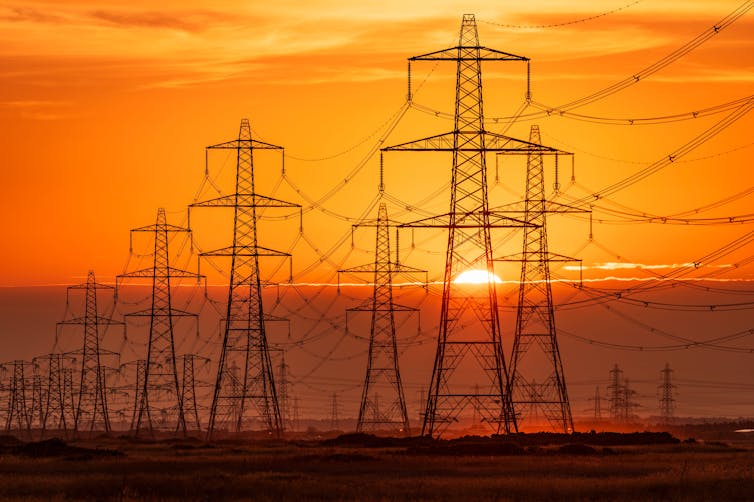
SuxxesPhoto/Shutterstock
In the UK, AI and related infrastructure consumed around 3.6 terawatt-hours (TWh) of electricity in 2020. If this consumption increases twentyfold, as per the government’s target, it could reach 72 TWh by 2030. This would represent over one-quarter of the UK’s total electricity consumption in 2021, which was approximately 261 TWh.
The rapid growth in AI computing requires careful planning. However, data centres are only part of the equation. The devices that use AI, such as sensors in smart homes, gas and electricity meters, routers, wifi hubs, streaming devices and social media platforms, could add significant energy demand that is difficult to estimate.
These additional components of AI’s total energy consumption are often overlooked.
Renewable energy growth is insufficient
The UK has made significant strides in renewable energy production, with wind and solar power contributing over 40% of electricity in recent years.
However, our projections, reported in the journal Energy Policy, indicate that global renewable electricity supply will not meet surging demand from global digital data growth.
Our research considered different scenarios for AI’s energy use. The UK’s target of a twentyfold increase in AI computing power by 2030 is certainly a high-consumption scenario, in which energy demand from digital infrastructure alone could outpace the growth of renewable energy capacity.
At the same time, the UK’s decarbonisation hinges on electrifying transport and heating, sectors traditionally reliant on fossil fuels: replacing natural gas boilers with electric heat pumps and combustion engine cars with electric vehicles. These will require substantial increases in electricity supply.
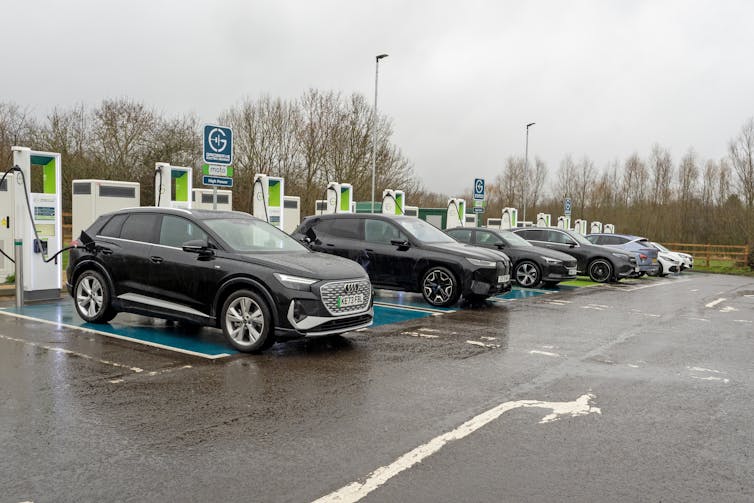
Shutterstock
However, solving this problem will not just require expanding renewable energy production. The energy efficiency of AI systems and related technologies must improve too. Ensuring that the energy needed for AI and other digital advancements is sustainably sourced, without compromising broader net zero goals, will require a combination of government policy, technological innovation and public awareness.
AI’s growing electricity needs could exacerbate competition for limited renewable energy resources. This competition risks increasing reliance on fossil fuels, especially during periods of peak energy demand. If additional renewable capacity cannot be deployed quickly enough, the UK might face a scenario where AI-driven electricity demand increases overall emissions rather than reducing them.
The UK’s commitment to a twentyfold increase in public AI computing power by 2030 presents an immense challenge for the country’s electricity system. Meeting this goal sustainably will require balancing AI’s energy needs with broader electrification goals and renewable energy limitations.
Without immediate and concerted efforts to expand renewable energy and improve efficiency, AI’s electricity demands could hinder the transition to a net zero future.
Don’t have time to read about climate change as much as you’d like?
Get a weekly roundup in your inbox instead. Every Wednesday, The Conversation’s environment editor writes Imagine, a short email that goes a little deeper into just one climate issue. Join the 40,000+ readers who’ve subscribed so far.
Tom Jackson, Professor of Information and Knowledge Management, Loughborough University and Ian R. Hodgkinson, Professor of Strategy, Loughborough University
This article is republished from The Conversation under a Creative Commons license. Read the original article ( https://theconversation.com/how-the-uks-plans-for-ai-could-derail-net-zero-the-numbers-explained-247397 ).
Source: zedreviews.com
For enquiries, product placements, sponsorships, and collaborations, connect with us at [email protected]. We'd love to hear from you!
Our humans need coffee too! Your support is highly appreciated, thank you!