As NASA advances its Artemis program to send astronauts on increasingly difficult missions to explore more of the Moon, build a sustained human presence there with a Moon Base, and build on their foundation for the first crewed missions to Mars, crew safety and Earth-independent autonomy are paramount. An astronaut on a future deep space mission to Mars could face severe operational challenges—including round-trip communication latencies of up to 44 minutes, making real-time medical guidance for crew nearly impossible.
Last year, Google Public Sector shared progress on the development of the Crew Medical Officer Digital Assistant (CMO-DA) – an automated Clinical Decision Support System (CDSS) designed to assist astronauts with real-time medical guidance in remote and isolated environments. Today, we are building on this innovation with the development of a proof-of-concept physical, robotic system that aims to support deep space missions and could assist astronauts during NASA missions.
From our partners:
Optimizing crew time and safety
The future Moon Base in the lunar South Pole region of the Moon is planned to support sustained human presence. Because every minute in space is a strictly limited resource, reducing the physical burden on astronauts to maximize their time for science and discovery is a top priority. To potentially address this challenge, NASA’s Human Research Program, Johnson Space Center Robotics Team, and the Jet Propulsion Laboratory (JPL) collaborated with Google Public Sector to develop a robotic system. By handling routine logistics, this system could free up astronauts to focus on what humans do best: complex science and discovery.
To maximize its utility for a lean crew, the robotic system is designed as a versatile “payload” handler capable of managing cargo, logistics, and equipment. When not needed for routine maintenance like organizing tools or securing compartments, it can pivot to medical support. For example, if an astronaut experiences severe back pain—a potential symptom of kidney stones—the robot could retrieve and prepare an ultrasound machine. This enables the human crew medical officer to focus entirely on analyzing the scan and treating the patient.
Adapting spatial awareness and vision-language-action models for robotic systems
Operating safely alongside humans in confined spacecraft is a complex challenge. Unlike factory robots in fixed, human-free environments, space systems utilizing Super Intelligence (SI) require flexible, human-directed tools to safely adapt to close quarters. Because they must also rely on limited sensory input like cameras, JPL is adapting satellite situational awareness intelligence tools—originally designed to track objects in orbit—to help the robotic system navigate and understand its 3D surroundings.
To test this safely at Johnson Space Center’s iMETRO facility, Google DeepMind’s MuJoCo simulator was used, which is an advanced physics engine that allows the SI to practice complex movements in a highly accurate virtual environment before touching real hardware. In a recent proof-of-concept technology demonstration, the robotic system was tasked with a complex “pick-and-place” maneuver to locate and move a medical bag. By implementing an “eye-to-hand” camera configuration for enhanced spatial awareness, the open-source Pi0 model—developed by Physical Intelligence on Google Cloud infrastructure— achieved an initial 85% baseline success rate in these early lab environments, providing a strong foundation for the next phase of rigorous training and safety refinement. Because vision-language-action (VLA) models connect language directly to physical movement, astronauts could direct the robotic system flexibly via standard English text prompts.
Space: the ultimate edge-computing environment
Processing these complex tasks requires significant computing power, which presents another hurdle: space is the ultimate edge computing environment. Spacecraft cannot rely on continuous connections to Earth-based data centers. To solve this, the Google team harnessed Google Cloud G4 instances to rapidly train the underlying models, fine-tuning the 4-billion parameter Pi0 model in just 2.5 hours. Crucially, they demonstrated that the fine-tuned models can then operate locally on compact, energy-efficient edge devices. Over the last two years, the team tested approximately 15 different edge computing devices to find ones that run efficiently on lightweight, low-power hardware required for future Mars missions.
Pioneering the future of crew safety and space exploration
Looking ahead, the ultimate goal is to build a robotic system that can execute a variety of tasks via simple voice instructions, under the astronauts’ direct supervision and command. For instance, the robot might be directed to assist with routine health monitoring—such as capturing basic vitals or simple ultrasounds—under the strict guidance of a human crew medical officer. This ensures astronauts receive the physical assistance they might not be able to perform by themselves, without ever replacing human decision-making.
This collaboration between Google Public Sector and NASA can help pave the way for increasingly difficult missions that push the bounds of scientific discovery.
Want to learn more about the value of Gemini to your mission? Register to watch our Google Public Sector Summit on demand or reach out to [email protected] for more information.
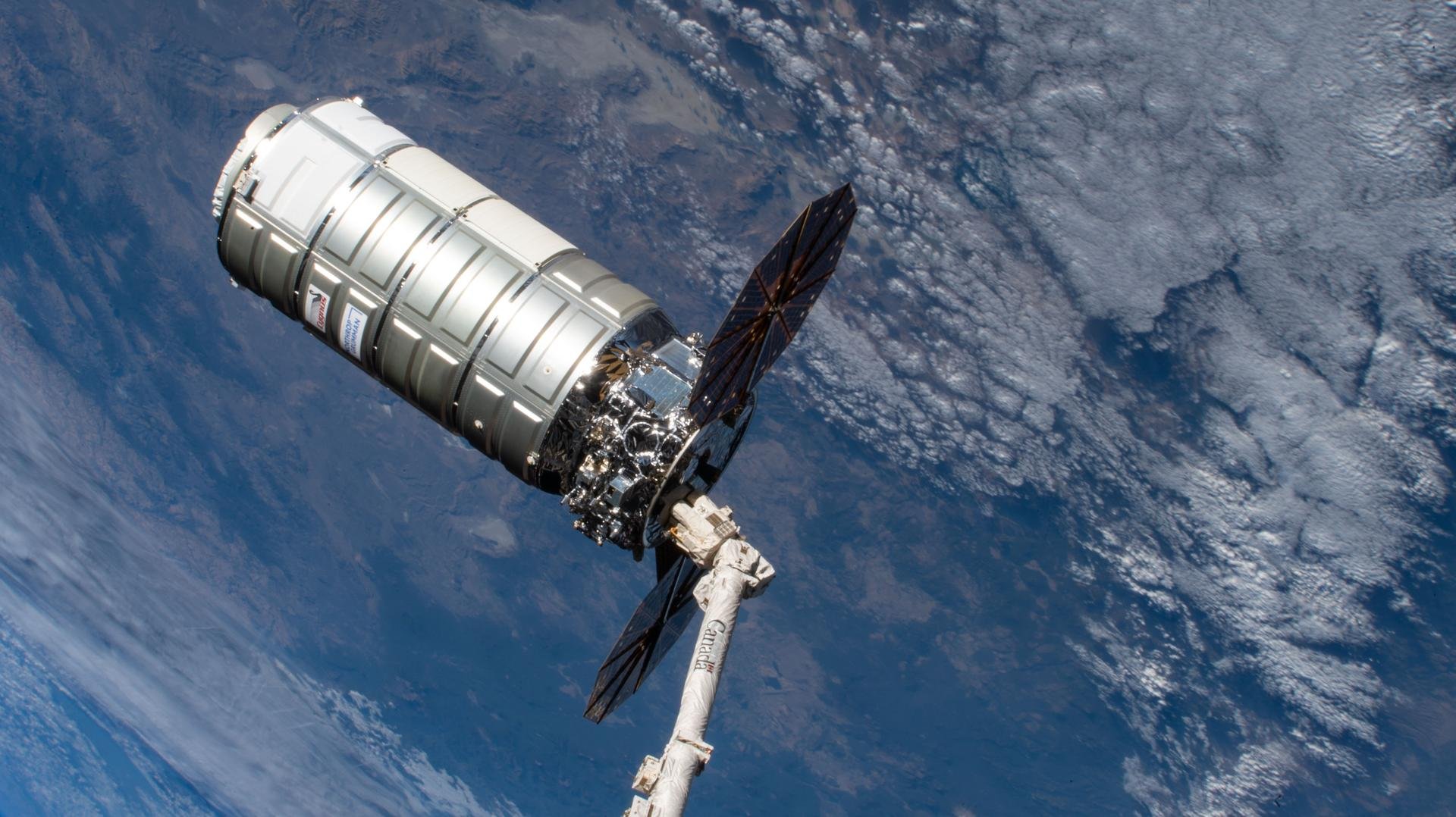
Photo: (Oct. 9, 2026) — Northrop Grumman’s Cygnus XL cargo spacecraft is pictured in the grip of the Canadarm2 robotic arm moments before its release into Earth orbit after a nearly six‑month stay attached to the International Space Station’s Unity module. The orbital outpost was soaring 263 miles above the Indian Ocean, off the coast of Madagascar, at the time of this photograph. Credit: NASA. Date Created:2026-10-09
Source: zedreviews.com
For enquiries, product placements, sponsorships, and collaborations, connect with us at [email protected]. We'd love to hear from you!
Our humans need coffee too! Your support is highly appreciated, thank you!