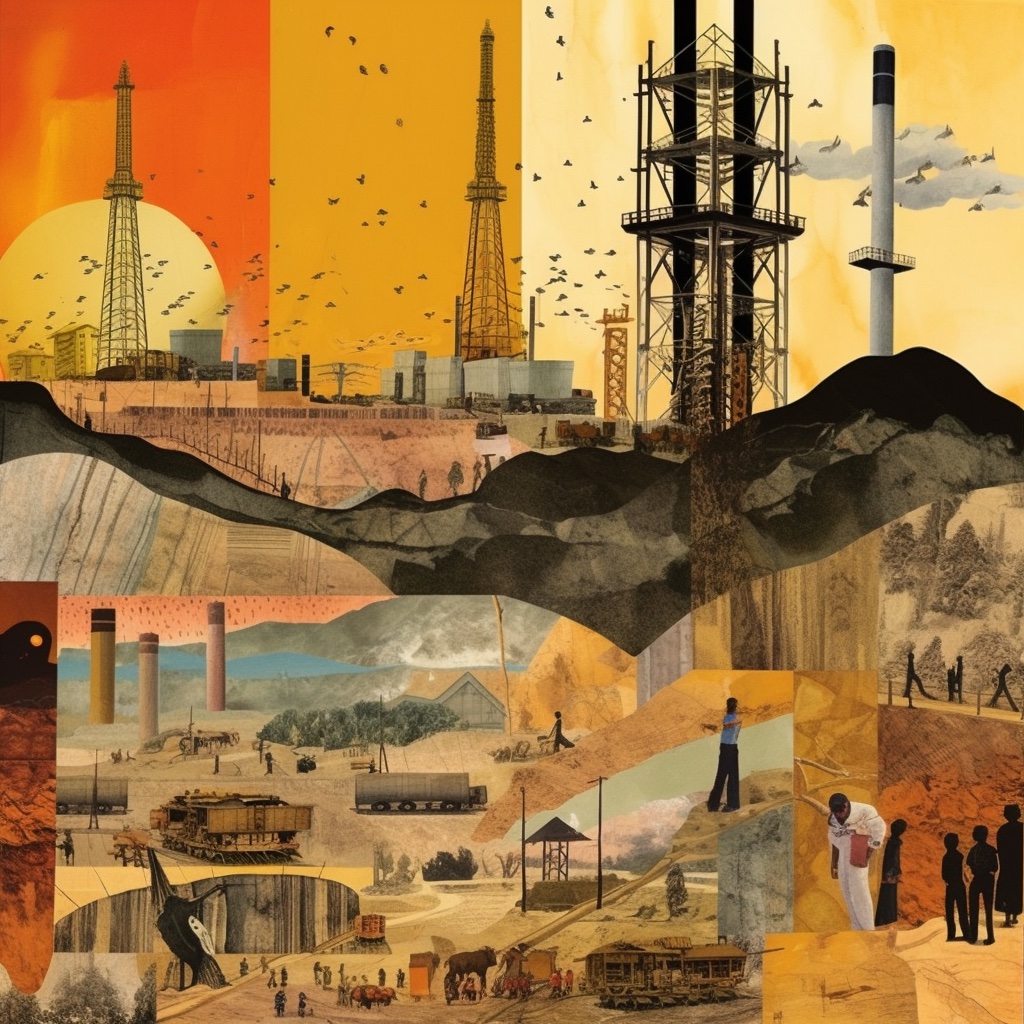
Few industries can match the oil industry’s vertical integration and central role in power politics. Over time, imperial powers and multinational corporations (MNCs) have emerged as dominant players in global energy production. Different factors contribute to their domination such as the challenges posed by nationalisations and the Organisation of the Petroleum Exporting Countries (OPEC), and the broader impact of fossil fuels on the history of capitalism and the current ecological crisis.
The Ascendancy of Imperial Powers and MNCs in the Oil Industry
Imperial powers gained a distinct advantage in the oil industry due to their geographical positioning. During the 19th and early 20th centuries, European powers such as Britain and France controlled vast territories abundant in oil reserves. Notably, the Middle East, particularly the region known as the “Persian Gulf,” became a focal point for imperial powers due to its vast oil resources.
From our partners:
For instance, the discovery of oil in Persia (now Iran) in the early 20th century led to the establishment of the Anglo-Persian Oil Company (later renamed British Petroleum), which emerged as a major player in the global oil industry. Similarly, the exploitation of oil resources in Iraq by British companies solidified the influence of imperial powers in the region.
Technological advancements also played a pivotal role in the dominance of imperial powers and MNCs. Companies such as Standard Oil, led by John D. Rockefeller, spearheaded the development of advanced extraction and refining technologies. These innovations enabled more efficient extraction of oil reserves, leading to increased profitability for oil ventures.
Moreover, the political and economic influence wielded by imperial powers significantly bolstered their oil interests. Through diplomatic negotiations, they secured agreements with oil-producing nations, granting them exclusive access to resources and favourable trade conditions. These agreements often disadvantaged the host countries and further reinforced the dominance of imperial powers and MNCs in the global oil industry.
Nationalisations and the Challenge of OPEC
In the mid-20th century, a significant shift occurred as many oil-producing nations embarked on nationalisation initiatives to reclaim control over their resources. An emblematic event was the nationalisation of the Iranian oil industry in 1951, led by Prime Minister Mohammad Mossadegh. Mossadegh’s decision to nationalise the Anglo-Iranian Oil Company (later British Petroleum) was a response to decades of perceived exploitation by foreign powers.
Similar nationalisation movements took place in other oil-rich countries such as Iraq, Venezuela, and Libya. These actions aimed to challenge the dominance of MNCs and regain control over natural resources. Consequently, state-owned oil companies, including Petróleos de Venezuela (PDVSA) and Iraq National Oil Company (INOC), emerged.
In 1960, oil-producing nations further consolidated their influence by forming the Organisation of the Petroleum Exporting Countries (OPEC). OPEC provided member countries with a collective platform to exert control over oil prices and production levels. A notable challenge posed by OPEC to the dominance of imperial powers and MNCs was the oil embargo of 1973. This embargo, led by OPEC member countries, aimed to protest Western support for Israel during the Yom Kippur War. The embargo triggered a global oil crisis, underscoring OPEC’s influence and power over the oil market.
Fossil Fuels in the History of Capitalism
The history of capitalism is intricately intertwined with the widespread use of fossil fuels. The Industrial Revolution, which originated in the late 18th century, was fuelled by the abundant energy provided by coal. Coal-powered steam engines revolutionised transportation, manufacturing, and agriculture, resulting in unparalleled economic growth and the dawn of modern capitalism.
However, it was the discovery and utilisation of oil in the late 19th century that propelled capitalism to new heights. The invention of the internal combustion engine enabled the widespread adoption of oil as a versatile and efficient energy source. The rise of the automobile industry, led by companies such as Ford and General Motors, symbolised the integration of oil into capitalist societies, transforming transportation systems and facilitating economic expansion.
Fossil Fuels and the Current Ecological Crisis
While fossil fuels have played a pivotal role in driving economic growth and industrialisation, their continued usage has resulted in severe ecological consequences. The combustion of fossil fuels releases greenhouse gases, primarily carbon dioxide, into the atmosphere. This has significantly contributed to global warming and climate change, resulting in rising temperatures, melting polar ice caps, and an escalation in extreme weather events.
Furthermore, the extraction, transportation, and refining of fossil fuels have caused considerable environmental damage. Catastrophic oil spills, such as the Exxon Valdez spill in 1989 and the Deepwater Horizon disaster in 2010, have wreaked havoc on marine ecosystems and local communities.
The current ecological crisis necessitates a swift transition away from fossil fuels and an embrace of renewable energy sources. Governments, businesses, and individuals worldwide are increasingly investing in solar, wind, and geothermal energy, recognising the imperative to reduce greenhouse gas emissions and mitigate the impacts of climate change.
The dominance of imperial powers and multinational corporations in the global oil industry can be attributed to geographical advantages, technological advancements, and political influence. However, nationalisations and the formation of OPEC have presented challenges to this dominance, leading to shifts in global power dynamics. Fossil fuels have played a vital role in the history of capitalism, driving economic growth and globalisation. Nonetheless, their extensive usage has contributed to the ongoing ecological crisis, including climate change and environmental degradation.
Addressing this crisis necessitates a transition to sustainable energy sources and the adoption of environmentally friendly practices. The promotion of renewable energy technologies, energy efficiency measures, and international cooperation in reducing carbon emissions are crucial steps towards forging a greener and more resilient future. By acknowledging the historical role of fossil fuels and actively working to mitigate their impact, societies can strive for a sustainable and environmentally conscious global energy system.
For enquiries, product placements, sponsorships, and collaborations, connect with us at [email protected]. We'd love to hear from you!
Our humans need coffee too! Your support is highly appreciated, thank you!