aster.cloud aster.cloud
  • /
  • Platforms
    • Public Cloud
    • On-Premise
    • Hybrid Cloud
    • Data
  • Architecture
    • Design
    • Solutions
    • Enterprise
  • Engineering
    • Automation
    • Software Engineering
    • Project Management
    • DevOps
  • Programming
    • Learning
  • Tools
  • About
  • /
  • Platforms
    • Public Cloud
    • On-Premise
    • Hybrid Cloud
    • Data
  • Architecture
    • Design
    • Solutions
    • Enterprise
  • Engineering
    • Automation
    • Software Engineering
    • Project Management
    • DevOps
  • Programming
    • Learning
  • Tools
  • About
aster.cloud aster.cloud
  • /
  • Platforms
    • Public Cloud
    • On-Premise
    • Hybrid Cloud
    • Data
  • Architecture
    • Design
    • Solutions
    • Enterprise
  • Engineering
    • Automation
    • Software Engineering
    • Project Management
    • DevOps
  • Programming
    • Learning
  • Tools
  • About
  • Gears
  • Mobile
  • Tech

Behind The New Samsung Fold: How The Quest To Maximise Screen Size Is Driving Major Innovation

  • root
  • September 23, 2020
  • 4 minute read

To enlarge a phone, or not to enlarge a phone? That is the question. In the world of flagship smartphones, there seems to be one clear trend: bigger is better.

Manufacturers are trying to strip away anything that might stand in the way of the largest possible slab of screen. There is also growing demand for thinner phones with diminishing bezels (the area surrounding a screen).


Partner with aster.cloud
for your next big idea.
Let us know here.


From our partners:

CITI.IO :: Business. Institutions. Society. Global Political Economy.
CYBERPOGO.COM :: For the Arts, Sciences, and Technology.
DADAHACKS.COM :: Parenting For The Rest Of Us.
ZEDISTA.COM :: Entertainment. Sports. Culture. Escape.
TAKUMAKU.COM :: For The Hearth And Home.
ASTER.CLOUD :: From The Cloud And Beyond.
LIWAIWAI.COM :: Intelligence, Inside and Outside.
GLOBALCLOUDPLATFORMS.COM :: For The World's Computing Needs.
FIREGULAMAN.COM :: For The Fire In The Belly Of The Coder.
ASTERCASTER.COM :: Supra Astra. Beyond The Stars.
BARTDAY.COM :: Prosperity For Everyone.

This trend has now culminated in the latest innovation in smartphone design, the foldable screen phone. These devices sport thin OLED self illuminating screens that can be folded in half.

The newest release is the Samsung Galaxy Z fold 2 – a device that is almost three-quarters screen and has extravagant overtones rivalled only by a hefty A$2,999 price tag.

But to prevent the phones themselves from growing to unwieldy size, manufacturers are having to find ways to balance size with usability and durability. This presents some interesting engineering challenges, as well as some innovative solutions.

A giant, old-style phone
Why do we love large phones? Pixabay, CC BY-NC-ND

Internal design complexities of folding phones

Modern phones still typically use a thin LCD or plastic OLED display covered by an outer glass panel.

Folding displays are a new category that exploit the flexibility of OLED display panels. Instead of simply fixing these panels to a rigid glass panel, they carefully engineer the panel so that it bends – but never quite tightly enough to snap or crack.

Internal structural support is needed to make sure the panel doesn’t crease, or isn’t stressed to the point of creating damage, discolouration or visible surface ripples.

Since this is a mechanical, moving system, reliability issues need to be considered. For instance, how long will the hinge last? How many times can it be folded and unfolded before it malfunctions? Will dirt or dust make its way into the assembly during daily use and affect the screen?

Read More  Getting Started With The Security Foundations Blueprint Automation Repo

Such devices need an added layer of reliability over traditional slab-like phones, which have no moving parts.


Large screen, thin phone: a recipe for disaster?

Each generation of smartphones becomes thinner and with smaller bezels, which improves the viewing experience but can make the phone harder to handle.

In such designs, the area of the device you can grip without touching the display screen is small. This leads to a higher chance of dropping the device – a blunder even the best of us have made.

There’s an ongoing tussle between consumers and manufacturers. Consumers want a large, viewable surface as well as an easily portable and rugged device. But from an engineering point of view, these are usually competing requirements.

You’ll often see people in smartphone ads holding the device with two hands. In real life, however, most people use their phone with one hand.

Thus, the shift towards larger, thinner phones has also given rise to a boom in demand for assistive tools attached to the back, such as pop-out grips and phone rings.

In trying to maximise screen size, smartphone developers also have to account for interruptions in the display, such as the placement of cameras, laser scanners (for face or object identification), proximity sensors and speakers. All are placed to minimise visual intrusion.


Now you see it, now you don’t

In the engineering world, to measure the physical world you need either cameras or sensors, such as in a fingerprint scanner.

With the race to increase the real estate space on screens, typically these cameras and scanners are placed somewhere around the screen. But they take up valuable space.

Read More  Equinix And Omantel Open New Muscat Data Center

This is why we’ve recently seen tricks to carve out more space for them, such as pop up cameras and punch-hole cameras, in which the camera sits in a cutout hole allowing the display to extend to the corners.
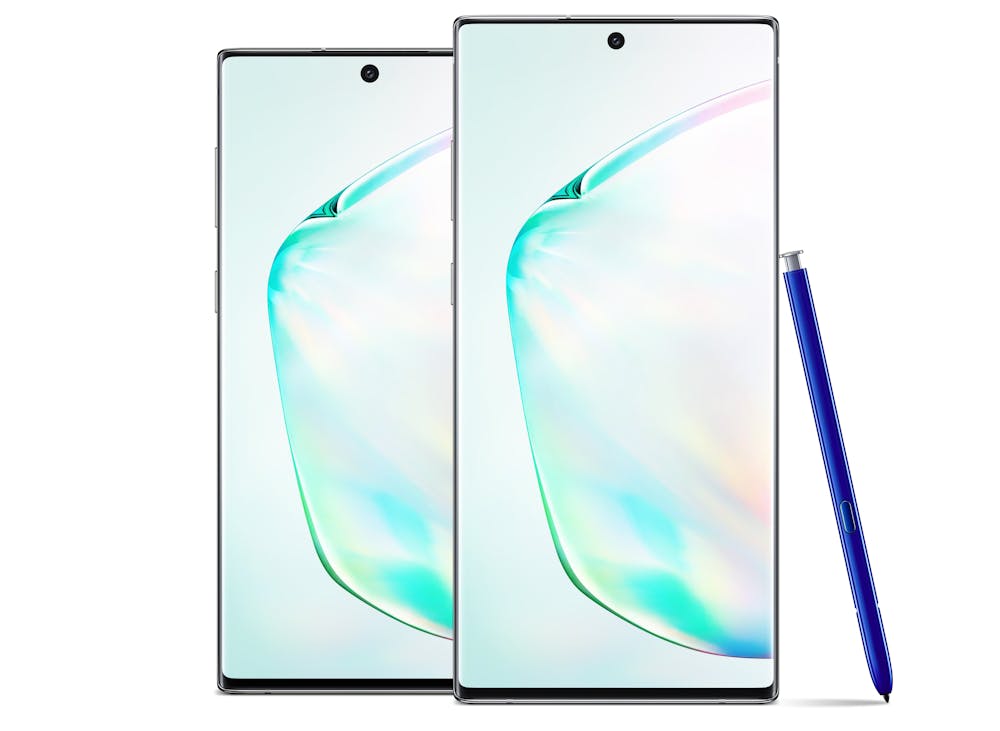
Front view of Samsun Galaxy Note 10.
The Samsun Galaxy Note 10 has a centered punch hole front-facing camera. Samsung

But another fantastic place for sensors is right in front of us: the screen. Or more specifically, under the screen.

Samsung is one company that has suggested placing selfie-cameras and fingerprint readers behind the screen. But how do you capture a photo or a face image through a layer of screen?

Up until recently, this has been put in the “too hard basket”. But that is changing: Xiaomi, Huawei and Samsung all have patents for under-display cameras.

There are a range of ways to do this, from allowing a camera to see through the screen, to using microlenses and camera pixels distributed throughout the display itself – similar to an insect’s compound eye.

In either case, the general engineering challenge is to implement the feature in a way that doesn’t impact screen image quality, nor majorly affect camera resolution or colour accuracy.
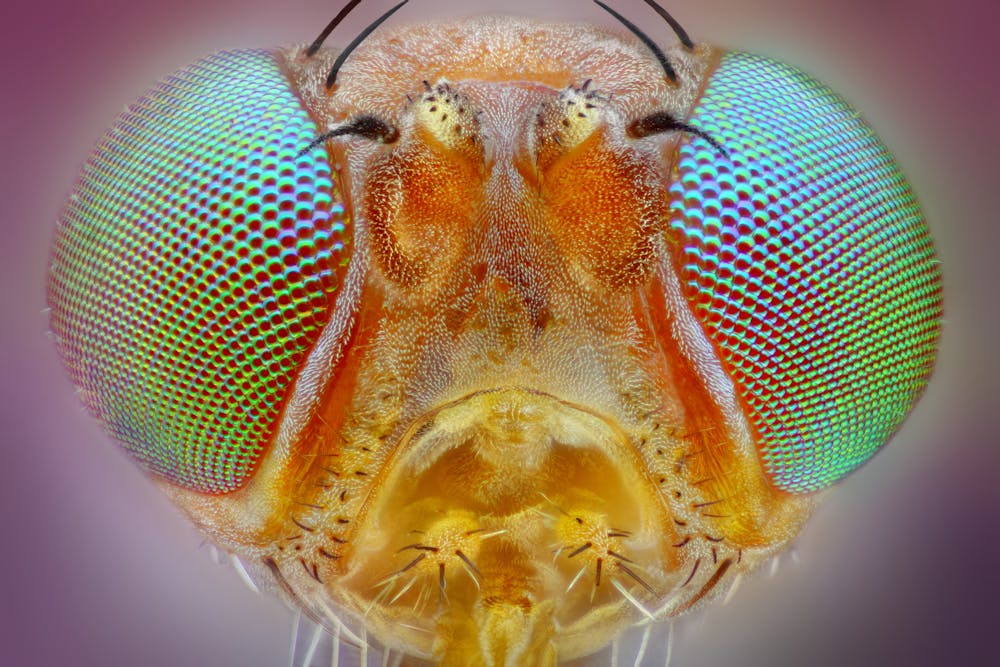
Close up of an insect's compound eyes
Insects have compound eyes. These are made up of repeating units called the ommatidia, sometimes with thousands in each eye. Each ommatidia is a separate visual receptor. Shutterstock

Laptops in our pockets

With up to 3.8 billion smartphone users expected by 2021, mobile computing is a primary consumer technology area seeing significant growth and investment.

One driver for this is the professional market, where larger mobile devices allow more efficient on-the-go business transactions. The second market is individuals who who only have a mobile device and no laptop or desktop computer.

It’s all about choice, but also functionality. Whatever you choose has to get the job done, support a positive user experience, but also survive the rigours of the real world.

Read More  Google Cloud Next 2019 | Defining and Deploying Responsible Technology

Andrew Maxwell, Senior Lecturer, University of Southern Queensland

This article is republished from The Conversation under a Creative Commons license.


For enquiries, product placements, sponsorships, and collaborations, connect with us at [email protected]. We'd love to hear from you!

Our humans need coffee too! Your support is highly appreciated, thank you!

root

Related Topics
  • Android
  • Cameras
  • Digital Age
  • Digital innovation
  • iPhone
  • Mobile devices
  • Mobile phones
  • New technology
  • Samsung
  • Selfies
  • Smart phones
  • Smartphones
  • Technology
You May Also Like
View Post
  • Gears

Zed Approves | How to Stay Cool in Extreme Heat

  • June 29, 2026
View Post
  • Gears

Zed Approves | It’s Prime Day 2026! Time to Upgrade Your World Cup Viewing Setup and Beat the Heat

  • June 25, 2026
View Post
  • Gears

Zed Approves | The Best Prime Day PC Deals: Top Gaming Rigs, Workstations, and Everyday Laptops

  • June 24, 2026
neon-cart
View Post
  • Gears

Zed Approves: How to Gear Up for GTA 6 This Amazon Prime Day (2026 Quick Guide)

  • June 22, 2026
zedreviews-valerion
View Post
  • Gears
  • Technology

Father’s Day Outdoors – Build Dad the Ultimate Backyard Watch Party

  • June 20, 2026
zedreviews-fathers-day-50830
View Post
  • Gears
  • Technology
  • Tools

Father’s Day Outdoors, Round Two – Gear for the Action, the Tailgate, and Beating the Heat

  • June 20, 2026
zedreviews-fathers-day-2147684744
View Post
  • Gears
  • Technology
  • Tools

The Ultimate Father’s Day Gift Guide – Home Entertainment Upgrades Dad Actually Wants

  • June 20, 2026
zedreviews-fathers-day-21306
View Post
  • Gears
  • Technology

A Father’s Day Gift Guide for Every Dad – Timepieces and Travel Gear

  • June 20, 2026

Stay Connected!
LATEST
  • 1
    IBM Study: One in Four Malicious Breaches are AI-Enabled, Costing Companies $6 Million on Average
    • July 29, 2026
  • 2
    Accelerating the frontiers of scientific discovery: Google’s $40M commitment to the Genesis Mission
    • July 26, 2026
  • 3
    3 Questions: Neural transparency and the future of AI design
    • July 17, 2026
  • 4
    Intel Invests €5 Billion to Expand Manufacturing in Europe
    • July 13, 2026
  • 5
    IBM and Red Hat Expand Lightwell with New Offerings to Build the Trust Infrastructure for AI-Era Open Source
    • July 8, 2026
  • 6
    When I Was Young
    • July 4, 2026
  • 7
    The Fastest AI Fried Chicken In The World
    • June 29, 2026
  • 8
    Zed Approves | How to Stay Cool in Extreme Heat
    • June 29, 2026
  • 9
    The AI investment surge hasn’t produced the expected results yet. That could change in 2026
    • June 26, 2026
  • 10
    Zed Approves | It’s Prime Day 2026! Time to Upgrade Your World Cup Viewing Setup and Beat the Heat
    • June 25, 2026
about
Hello World!

We are aster.cloud. We’re created by programmers for programmers.

Our site aims to provide guides, programming tips, reviews, and interesting materials for tech people and those who want to learn in general.

We would like to hear from you.

If you have any feedback, enquiries, or sponsorship request, kindly reach out to us at:

[email protected]
Most Popular
  • 1
    Zed Approves | The Best Prime Day PC Deals: Top Gaming Rigs, Workstations, and Everyday Laptops
    • June 24, 2026
  • neon-cart 2
    Zed Approves: How to Gear Up for GTA 6 This Amazon Prime Day (2026 Quick Guide)
    • June 22, 2026
  • zedreviews-valerion 3
    Father’s Day Outdoors – Build Dad the Ultimate Backyard Watch Party
    • June 20, 2026
  • zedreviews-fathers-day-50830 4
    Father’s Day Outdoors, Round Two – Gear for the Action, the Tailgate, and Beating the Heat
    • June 20, 2026
  • zedreviews-fathers-day-2147684744 5
    The Ultimate Father’s Day Gift Guide – Home Entertainment Upgrades Dad Actually Wants
    • June 20, 2026
  • /
  • Technology
  • Tools
  • About
  • Contact Us

Input your search keywords and press Enter.