aster.cloud aster.cloud
  • /
  • Platforms
    • Public Cloud
    • On-Premise
    • Hybrid Cloud
    • Data
  • Architecture
    • Design
    • Solutions
    • Enterprise
  • Engineering
    • Automation
    • Software Engineering
    • Project Management
    • DevOps
  • Programming
    • Learning
  • Tools
  • About
  • /
  • Platforms
    • Public Cloud
    • On-Premise
    • Hybrid Cloud
    • Data
  • Architecture
    • Design
    • Solutions
    • Enterprise
  • Engineering
    • Automation
    • Software Engineering
    • Project Management
    • DevOps
  • Programming
    • Learning
  • Tools
  • About
aster.cloud aster.cloud
  • /
  • Platforms
    • Public Cloud
    • On-Premise
    • Hybrid Cloud
    • Data
  • Architecture
    • Design
    • Solutions
    • Enterprise
  • Engineering
    • Automation
    • Software Engineering
    • Project Management
    • DevOps
  • Programming
    • Learning
  • Tools
  • About
  • Technology

The hardest part of creating conscious AI might be convincing ourselves it’s real

  • aster.cloud
  • November 6, 2025
  • 4 minute read


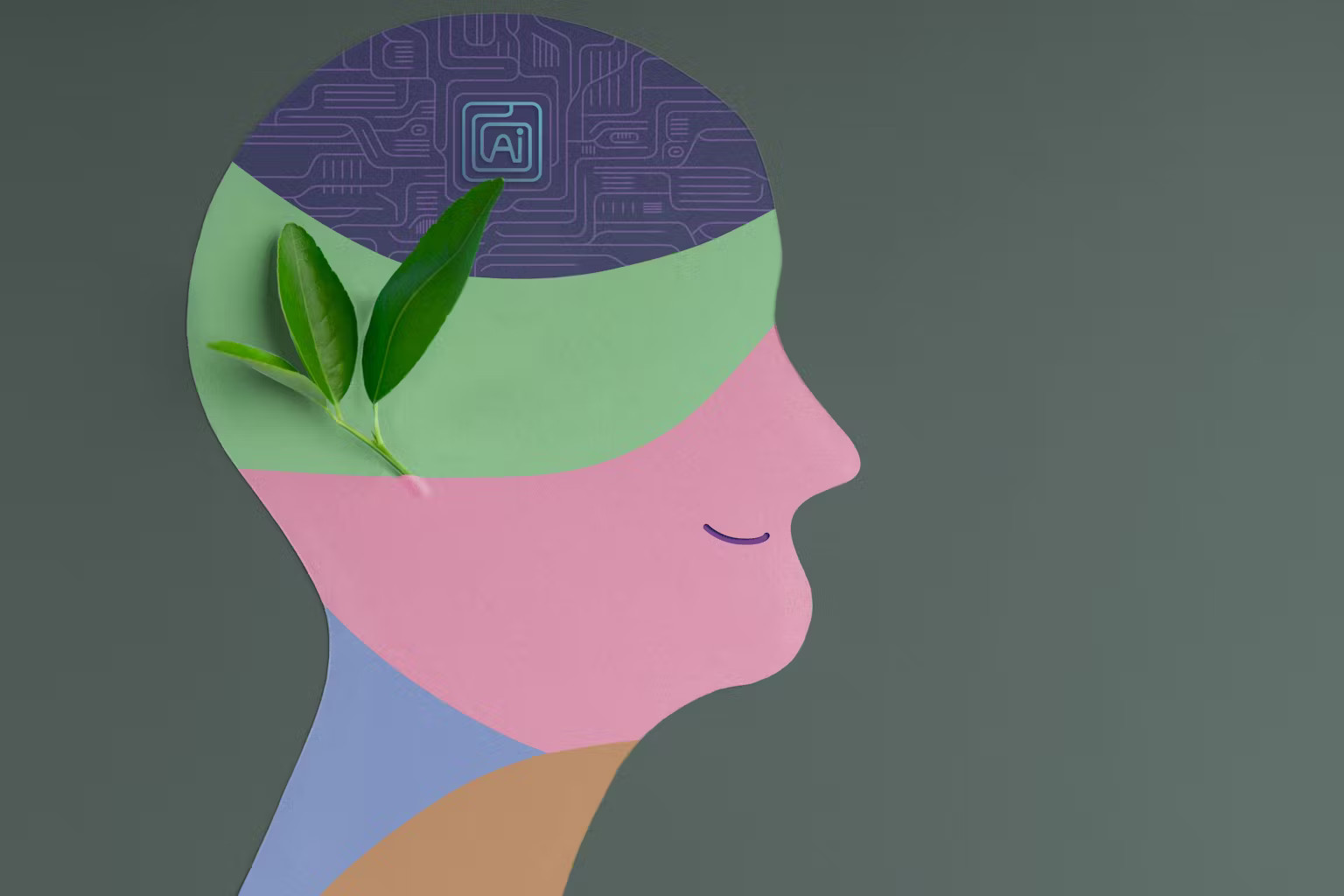
Leaf your prejudices at the door.
Black Salmon

David Cornell, University of Lancashire

As far back as 1980, the American philosopher John Searle distinguished between strong and weak AI. Weak AIs are merely useful machines or programs that help us solve problems, whereas strong AIs would have genuine intelligence. A strong AI would be conscious.


Partner with aster.cloud
for your next big idea.
Let us know here.


From our partners:

CITI.IO :: Business. Institutions. Society. Global Political Economy.
CYBERPOGO.COM :: For the Arts, Sciences, and Technology.
DADAHACKS.COM :: Parenting For The Rest Of Us.
ZEDISTA.COM :: Entertainment. Sports. Culture. Escape.
TAKUMAKU.COM :: For The Hearth And Home.
ASTER.CLOUD :: From The Cloud And Beyond.
LIWAIWAI.COM :: Intelligence, Inside and Outside.
GLOBALCLOUDPLATFORMS.COM :: For The World's Computing Needs.
FIREGULAMAN.COM :: For The Fire In The Belly Of The Coder.
ASTERCASTER.COM :: Supra Astra. Beyond The Stars.
BARTDAY.COM :: Prosperity For Everyone.

Searle was sceptical of the very possibility of strong AI, but not everyone shares his pessimism. Most optimistic are those who endorse functionalism, a popular theory of mind that takes conscious mental states to be determined solely by their function. For a functionalist, the task of producing a strong AI is merely a technical challenge. If we can create a system that functions like us, we can be confident it is conscious like us.

Illustration of a human talking to a robot

Anyone there?
Littlestar23

Recently, we have reached the tipping point. Generative AIs such as Chat-GPT are now so advanced that their responses are often indistinguishable from those of a real human – see this exchange between Chat-GPT and Richard Dawkins, for instance.

This issue of whether a machine can fool us into thinking it is human is the subject of a well-known test devised by English computer scientist Alan Turing in 1950. Turing claimed that if a machine could pass the test, we ought to conclude it was genuinely intelligent.

Back in 1950 this was pure speculation, but according to a pre-print study from earlier this year – that’s a study that hasn’t been peer-reviewed yet – the Turing test has now been passed. Chat-GPT convinced 73% of participants that it was human.

What’s interesting is that nobody is buying it. Experts are not only denying that Chat-GPT is conscious but seemingly not even taking the idea seriously. I have to admit, I’m with them. It just doesn’t seem plausible.

Read More  Fluid Intelligence. The Brain's Slippery Secret to Solving the Puzzle of Life!

The key question is: what would a machine actually have to do in order to convince us?

Experts have tended to focus on the technical side of this question. That is, to discern what technical features a machine or program would need in order to satisfy our best theories of consciousness. A 2023 article, for instance, as reported here in The Conversation, compiled a list of 14 technical criteria or “consciousness indicators”, such as learning from feedback (Chat-GPT didn’t make the grade).

But creating a strong AI is as much a psychological challenge as a technical one. It is one thing to produce a machine that satisfies the various technical criteria that we set out in our theories, but it is quite another to suppose that, when we are finally confronted with such a thing, we will believe it is conscious.

The success of Chat-GPT has already demonstrated this problem. For many, the Turing test was the benchmark of machine intelligence. But if it has been passed, as the pre-print study suggests, the goalposts have shifted. They might well keep shifting as technology improves.

Myna difficulties

This is where we get into the murky realm of an age-old philosophical quandary: the problem of other minds. Ultimately, one can never know for sure whether anything other than oneself is conscious. In the case of human beings, the problem is little more than idle scepticism. None of us can seriously entertain the possibility that other humans are unthinking automata, but in the case of machines it seems to go the other way. It’s hard to accept that they could be anything but.

Read More  CES 2025: Shaping the Future of Play

A particular problem with AIs like Chat-GPT is that they seem like mere mimicry machines. They’re like the myna bird who learns to vocalise words with no idea of what it is doing or what the words mean.

Myna bird

‘Who are you calling a stochastic parrot?’
Mikhail Ginga

This doesn’t mean we will never make a conscious machine, of course, but it does suggest that we might find it difficult to accept it if we did. And that might be the ultimate irony: succeeding in our quest to create a conscious machine, yet refusing to believe we had done so. Who knows, it might have already happened.

So what would a machine need to do to convince us? One tentative suggestion is that it might need to exhibit the kind of autonomy we observe in many living organisms.

Current AIs like Chat-GPT are purely responsive. Keep your fingers off the keyboard and they’re as quiet as the grave. Animals are not like this, at least not the ones we commonly take to be conscious, like chimps, dolphins, cats and dogs. They have their own impulses and inclinations (or at least appear to), along with the desires to pursue them. They initiate their own actions on their own terms, for their own reasons.

Perhaps if we could create a machine that displayed this type of autonomy – the kind of autonomy that would take it beyond a mere mimicry machine – we really would accept it was conscious?

It’s hard to know for sure. Maybe we should ask Chat-GPT.The Conversation

Read More  Intel Innovation 2023

David Cornell, Senior Lecturer in Philosophy, University of Lancashire

This article is republished from The Conversation under a Creative Commons license. Read the original article (https://theconversation.com/the-hardest-part-of-creating-conscious-ai-might-be-convincing-ourselves-its-real-268123).

Source: zedreviews.com


For enquiries, product placements, sponsorships, and collaborations, connect with us at [email protected]. We'd love to hear from you!

Our humans need coffee too! Your support is highly appreciated, thank you!

aster.cloud

Related Topics
  • AI
  • Artificial Intelligence
  • Turing Test
You May Also Like
View Post
  • Gears
  • Technology

Samsung Art Store Brings Art Basel to Homes Worldwide With New Curated Collection

  • June 15, 2026
View Post
  • Technology

The consequences of relying on AI for accurate news

  • June 10, 2026
View Post
  • Gears
  • Technology

WWDC26: Apple unveils next generation of Apple Intelligence, Siri AI, powerful parental controls, and an expansive set of software improvements

  • June 8, 2026
View Post
  • Technology

IBM and Google Cloud Announce Strategic Partnership to Scale AI with Human Expertise and AI‑Powered Delivery

  • June 4, 2026
View Post
  • Technology

Banks race to patch new cyber vulnerabilities, and other cybersecurity news

  • May 25, 2026
pope-leo-xiv-cq5dam-1500.844
View Post
  • Technology

Pope Leo XIV to Publish First Encyclical on Artificial Intelligence and Human Dignity on 25 May

  • May 22, 2026
View Post
  • Technology

Portfolio to Clients, and is Strengthened by Ongoing Project Glasswing Work

  • May 20, 2026
reMarkable Paper Pure
View Post
  • Gears
  • Technology

Everything The reMarkable Paper Pure Actually Does

  • May 14, 2026

Stay Connected!
LATEST
  • digital-nomad-freelancer-worker-2151205464 1
    One paperwork problem – Get your Digital Nomad Visa employment documents fast from UK, EU or Singapore
    • June 16, 2026
  • 2
    Samsung Art Store Brings Art Basel to Homes Worldwide With New Curated Collection
    • June 15, 2026
  • 3
    You Do Not Need to Invest in the IPO of SpaceX, Anthropic, and OpenAI
    • June 10, 2026
  • 4
    The consequences of relying on AI for accurate news
    • June 10, 2026
  • 5
    Connecting AI agents with unstructured data using Google Cloud Storage MCP Servers
    • June 10, 2026
  • 6
    WWDC26: Apple unveils next generation of Apple Intelligence, Siri AI, powerful parental controls, and an expansive set of software improvements
    • June 8, 2026
  • 7
    IBM and Google Cloud Announce Strategic Partnership to Scale AI with Human Expertise and AI‑Powered Delivery
    • June 4, 2026
  • Data center 8
    Data Sovereignty in Spain. It’s Not Just About the Law, It’s About Efficiency
    • June 3, 2026
  • 9
    Ink vs Pixels. What you miss versus what you are actually missing.
    • June 1, 2026
  • 10
    Banks race to patch new cyber vulnerabilities, and other cybersecurity news
    • May 25, 2026
about
Hello World!

We are aster.cloud. We’re created by programmers for programmers.

Our site aims to provide guides, programming tips, reviews, and interesting materials for tech people and those who want to learn in general.

We would like to hear from you.

If you have any feedback, enquiries, or sponsorship request, kindly reach out to us at:

[email protected]
Most Popular
  • pope-leo-xiv-cq5dam-1500.844 1
    Pope Leo XIV to Publish First Encyclical on Artificial Intelligence and Human Dignity on 25 May
    • May 22, 2026
  • 2
    Portfolio to Clients, and is Strengthened by Ongoing Project Glasswing Work
    • May 20, 2026
  • reMarkable Paper Pure 3
    Everything The reMarkable Paper Pure Actually Does
    • May 14, 2026
  • 4
    Scaling cloud and AI: Microsoft Azure’s commitment to Europe’s digital future
    • May 11, 2026
  • Anthropic Institute 5
    Introducing The Anthropic Institute
    • March 11, 2026
  • /
  • Technology
  • Tools
  • About
  • Contact Us

Input your search keywords and press Enter.